
- Issuing authority
- National Advance Information Center
- Jurisdiction
- United Arab Emirates
- Publication date
- September 23, 2026
- Effective date
- October 1, 2026
- Stage
- Final rule
- Official document
- Federal Decree Law No. 22 of 2018, Cabinet Resolution No. (23) of 2023, MPCI Business Specification Document
- Official source
- hscodematch.com
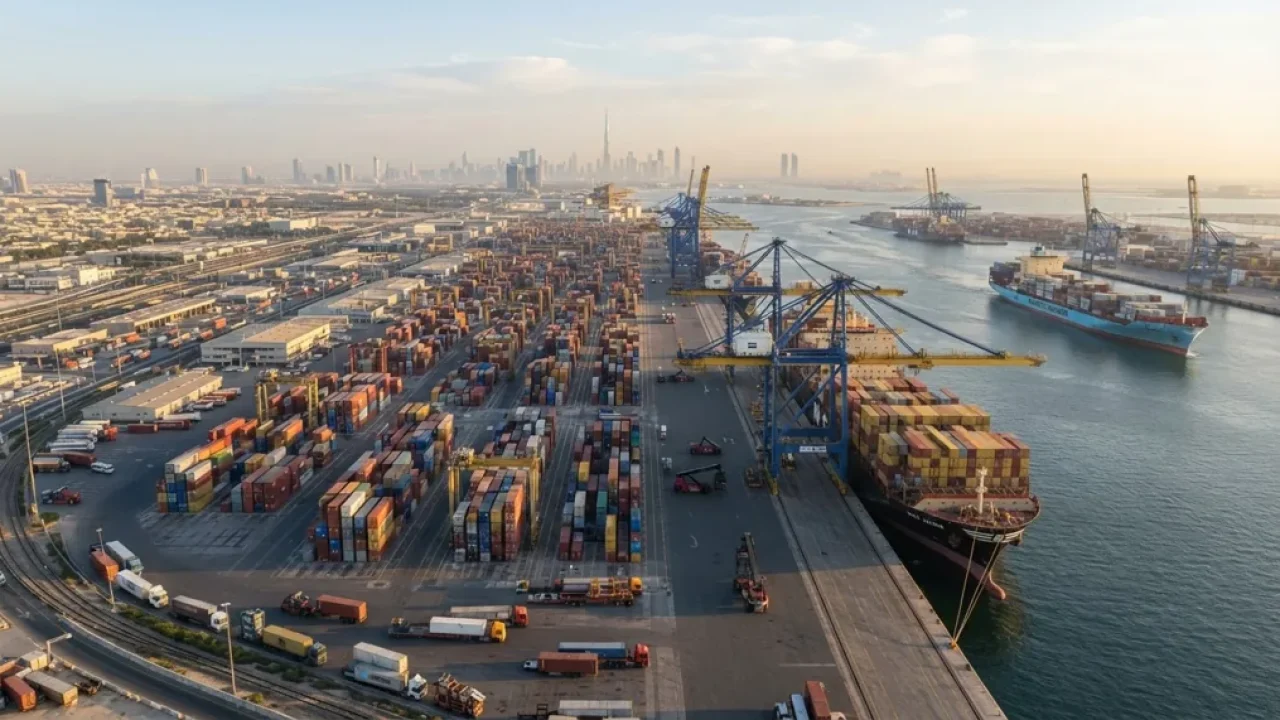
The UAE National Advance Information Center (NAIC), a department under the Federal Authority for Identity, Citizenship, Customs and Port Security (ICP), has made advance cargo reporting mandatory for maritime container shipments from October 1, 2026. Governed by the Maritime Pre-Load Cargo Information (MPCI) program, the regulation requires shipping lines, freight forwarders, and non-vessel operating common carriers (NVOCCs) to submit electronic bill of lading data prior to loading containers at the final foreign port of departure.
The requirement applies to containerized cargo categorized as full container loads (FCL) and less than container loads (LCL). It encompasses import shipments into the UAE, transit shipments, and transshipment cargo remaining on board (FROB). Current exclusions under this phase include non-containerized cargo such as breakbulk, liquid bulk, and roll-on roll-off shipments, as well as export cargo leaving the UAE, empty containers, wooden vessels, and crew belongings.
Filings are subject to strict pre-loading deadlines based on the transport document tier. Direct bills of lading and the lowest-level house bills of lading issued by freight forwarders must be submitted at least 24 hours prior to loading at the foreign port. Master bills of lading and master co-loader bills must be submitted at least 6 hours prior to loading. For grouped shipments, a master filing remains pending until all underlying house bills of lading have been filed.
NAIC screens the UN/EDIFACT electronic submissions and issues response messages. If cargo data is incomplete, rejected, or flagged as an unaddressed threat, the agency issues a 'Do Not Load' notice that prohibits the container from being placed aboard the vessel destined for the UAE. The legal framework rests on Federal Decree Law No. 22 of 2018, Resolution No. 15 of 2019, and Cabinet Resolution No. (23) of 2023.
Sources
- HS Code Match · 2026-10-02
- Gemini News Search — Policy & Legal Updates · 2026-10-03
- Gemini News Search — Policy & Legal Updates · 2026-10-02