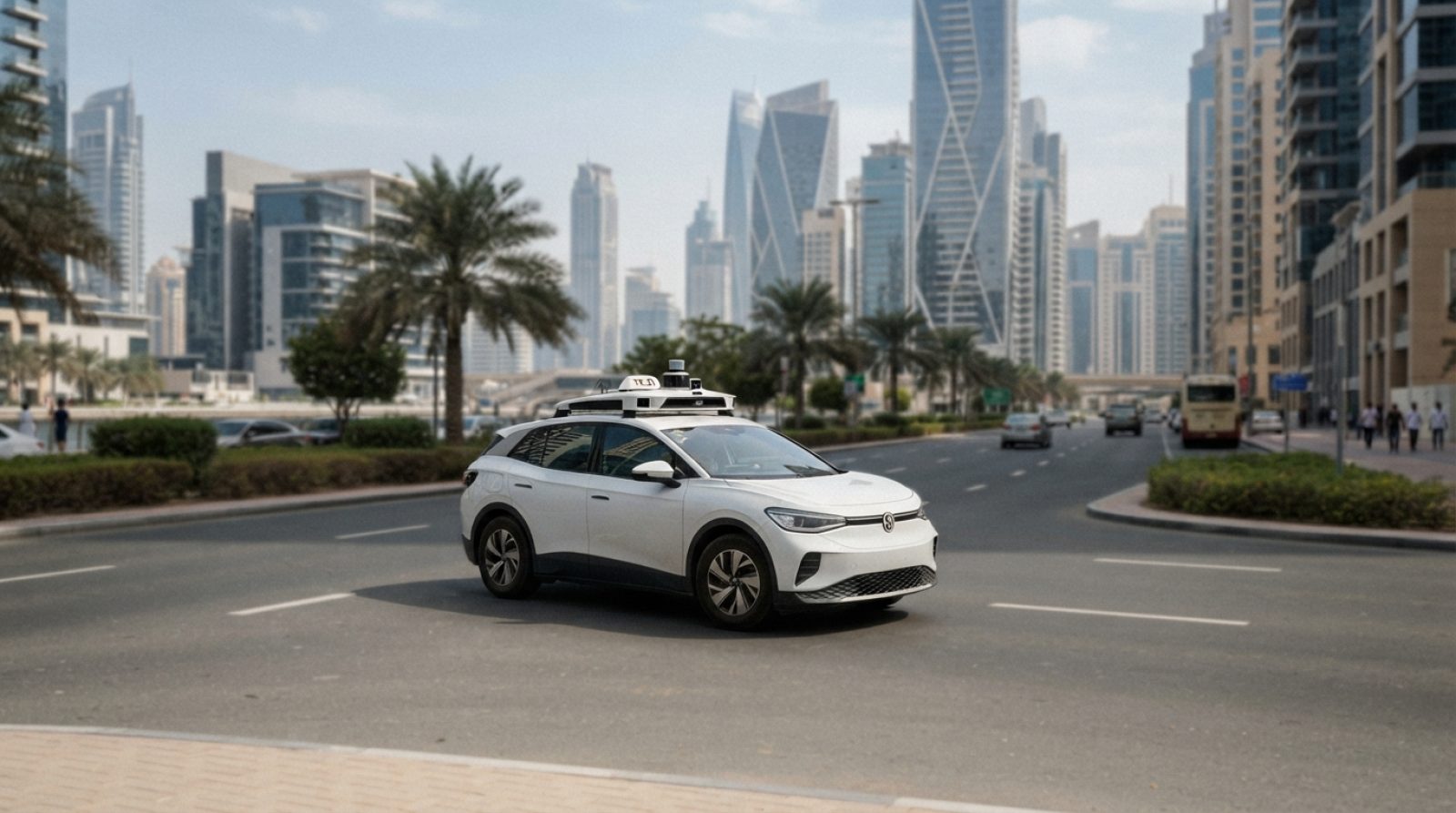
Chinese autonomous driving developers are expanding commercial operations in the Middle East and Hong Kong. Chinese autonomous mobility provider WeRide has scaled robotaxi fleet operations across Abu Dhabi and Dubai through joint distribution partnerships with Uber and Grab. WeRide holds regulatory licences across seven countries and operates across more than 40 cities in 11 nations.
Baidu's Apollo Go has also deployed autonomous taxis on streets in Dubai. According to Baidu's Q1 2026 financial report, Apollo Go delivered 3.2 million fully driverless rides in a single quarter, completed over 22 million cumulative trips, and maintained active operations across 27 cities worldwide.
In Hong Kong, the Transport Department issued Apollo Go a trial permit on July 23, 2026, for fully driverless testing across a 43.2-kilometer route on Airport Island, commencing on July 27, 2026. Apollo Go had logged over 240,000 test kilometers in Hong Kong with no reported safety anomalies. Domestically, Pony.ai launched commercial autonomous operations in Shenzhen's Bao'an District.
The industry continues to address technical and financial headwinds. A system glitch on March 31, 2026, immobilized over 100 Apollo Go vehicles in Wuhan. On the commercial front, WeRide reported a first-quarter net loss of RMB 389 million, while share prices of sector peers listed in Hong Kong remained down 40% to 60% compared to initial public offering valuations.
Market forecasts cited by Bastille Post highlight differing analyst views. CITIC Securities described 2026 as the inaugural year of commercial deployment, Morgan Stanley labeled it a singularity moment, and Goldman Sachs projected China's robotaxi sector will reach US$14 billion with a 535,000-vehicle fleet by 2030.
Sources
- Bastille Post · 2026-10-01
- Gemini News Search — Industry News · 2026-10-02
- Gemini News Search — Industry News · 2026-10-02
- Gemini News Search — China–UAE News · 2026-10-02
- Gemini News Search — China–UAE News · 2026-10-01
- Gemini News Search — Industry News · 2026-10-01
- Gemini News Search — China–UAE News · 2026-10-02
- Gemini News Search — China–UAE News · 2026-10-04