- Issuing authority
- UAE Ministry of Finance
- Jurisdiction
- United Arab Emirates
- Publication date
- October 22, 2026
- Effective date
- October 1, 2026
- Stage
- Final rule
- Official document
- Ministerial Decision No. 197 of 2026
- Official source
- ebmgs.com
The UAE Ministry of Finance has introduced amendments to its electronic invoicing system through Ministerial Decision No. 197 of 2026, which amends Ministerial Decision No. 243 of 2025 and took effect on 1 October 2026. The regulatory changes are intended to reduce operational burdens and offer greater flexibility during implementation.
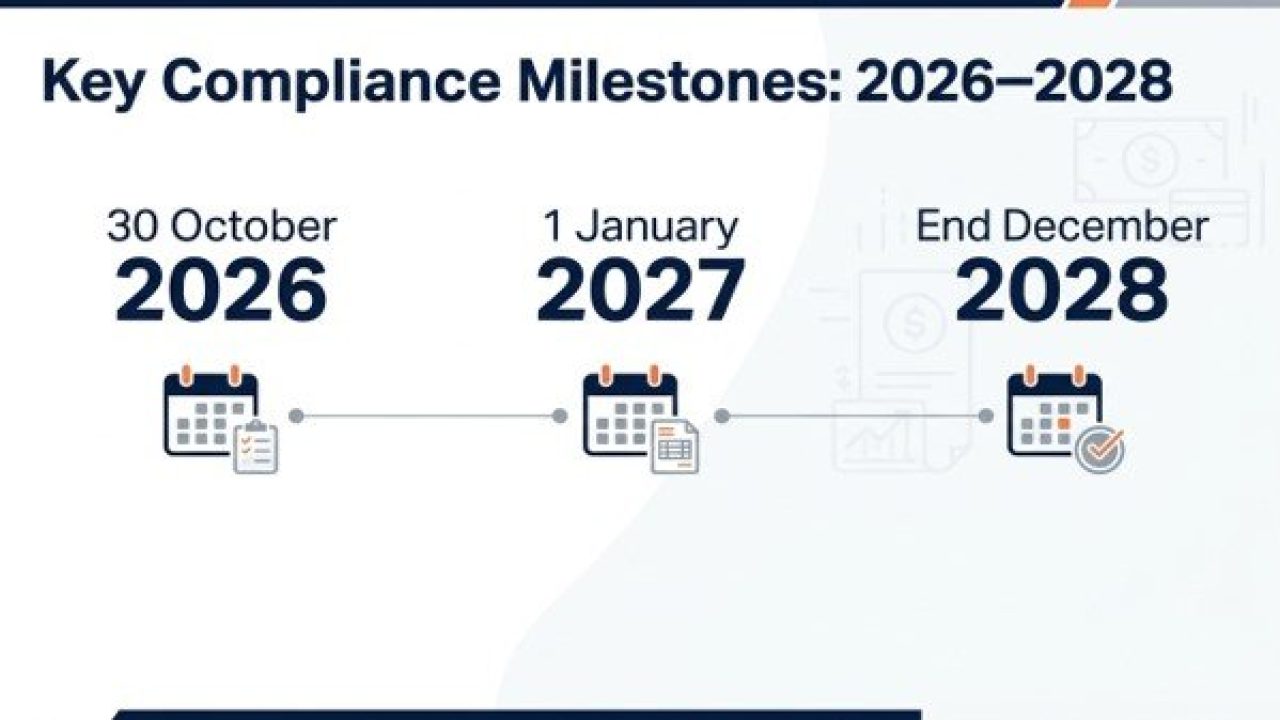
Under the amended rules, transactions between members of the same tax group are treated as excluded transactions for 24 months starting 1 January 2027 until the end of December 2028. Furthermore, the requirement to store electronic invoices, credit notes, and associated data exclusively within the UAE has been removed. Businesses may maintain data abroad provided they comply with the retention periods under the Tax Procedures Law and make records available to the Federal Tax Authority (FTA) upon request.
The framework also removed specific 'system failure' provisions, which reduces certain reporting obligations during technical disruptions. However, core implementation timelines remain unchanged: businesses generating annual revenues of AED 50 million or more must still appoint an accredited e-invoicing service provider by 30 October 2026 ahead of the 1 January 2027 go-live for large entities.
Separately, UAE authorities issued Cabinet Decision No. 149 of 2026, revising the standard input tax apportionment methodology for entities supplying both taxable and exempt goods and services. This framework will take effect from the first tax year commencing after 1 October 2027.
Sources
- RMC Tax Consultancy · 2026-10-22