- Issuing authority
- U.S. Department of the Treasury
- Jurisdiction
- United States
- Publication date
- October 1, 2026
- Effective date
- October 1, 2026
- Stage
- Final rule
- Official document
- Executive Order 13902
- Official source
- news.google.com
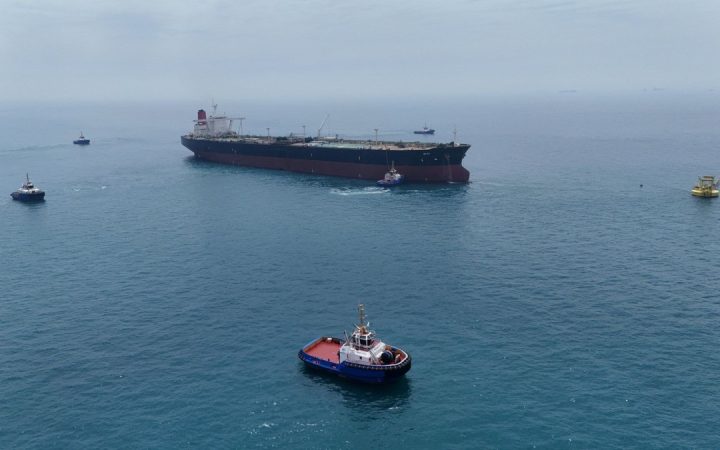
The U.S. Department of the Treasury announced two sanctions actions under its Operation Economic Outcast campaign on October 1, 2026, widening economic restrictions against Iran beyond the petroleum sector as a maritime blockade restricts sea trade. According to Treasury, Iran has increasingly utilized rail logistics and alternative financial mechanisms to sustain regional trade and transport oil, claiming Iranian oil revenues have fallen to zero under the naval blockade, though the publication noted this claim was not independently verified.
The newly announced measures identify Iran's automotive and rail sectors as sanctionable under Executive Order 13902. Key transport entities designated include the state-owned Islamic Republic of Iran Railway Company (RAI), Raja Passenger Trains Company, and freight rail operator Sherkat-E Rah Ahan-E Khamle-O-Naghle. Treasury stated these rail networks have been used to bypass disrupted maritime corridors to move oil and regional cargo.
In the automotive and industrial sectors, designations targeted Iran Khodro Company and SAIPA Iranian Automobile Manufacturing Company, which Treasury noted account for over 90% of Iran's domestic automotive market. Sanctions were also imposed on bus, truck, and motorcycle manufacturers and their overseas suppliers located in the United Arab Emirates, China, Hong Kong, Turkey, and Indonesia.
The enforcement action further targeted heavy industry, designating Heavy Equipment Production Company (HEPCO) and its China-based subsidiary, with Treasury asserting HEPCO machinery was used by the Islamic Revolutionary Guard Corps to construct military facilities. Additional designations hit steel-related trading firms in the UAE, China, Hong Kong, and Germany, alongside a network linked to businessman Ramin Keshvardoust accused of moving oil and steel shipments through shadow banking channels.
In a coordinated move against financial workarounds, the Office of Foreign Assets Control designated the Russia-linked A7 Network as a significant transnational criminal organization, alleging it facilitated Iranian oil revenues and weapons financing. Concurrently, the Financial Crimes Enforcement Network proposed a regulatory rule prohibiting certain fund transfers involving entities operating as sub-agents of the A7 Network.
Sources
- gCaptain · 2026-10-01
- Gemini News Search — Industry News · 2026-10-02