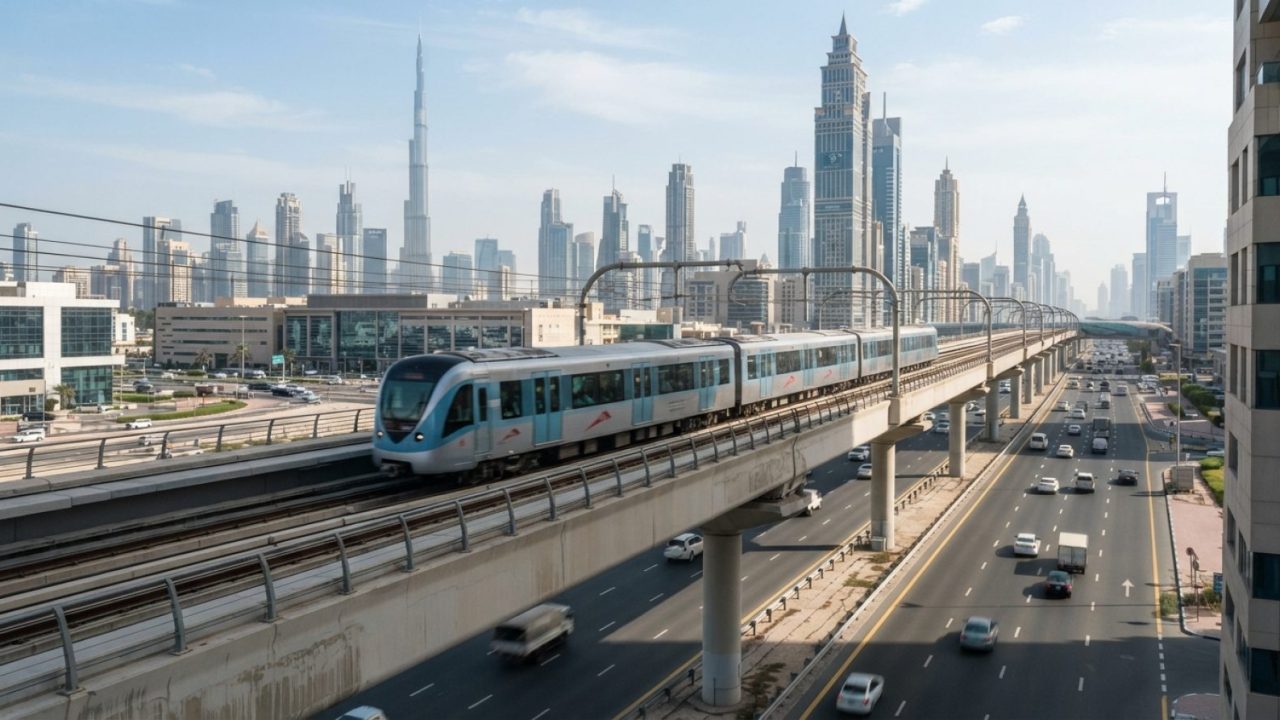
The UAE is investing heavily in public transit infrastructure to shift commuters away from private vehicles, according to EnterpriseAM. Etihad Rail passenger services now operate between Abu Dhabi and Dubai, Dubai is developing two new metro lines valued at over AED 54 billion combined, and Abu Dhabi is restructuring its bus operations and ticketing payment systems.
Despite these investments, transport specialists cited in the report stated that rail and metro network expansion alone will not displace private car usage unless first- and last-mile connectivity improves. For example, a feeder shuttle from Etihad Rail's Mohammed Bin Zayed City station to Al Reem Island takes approximately 55 minutes, compared to 28 minutes by car.
Martin Tillman, founder of transport consultancy TMP Consult, noted that UAE cities have historically been planned around private vehicles and warned that expanding road capacity can trigger induced demand that undermines public transport. Monica Menendez, professor at NYU Abu Dhabi and director of the CITIES Research Center, pointed out that in lower-density neighborhoods, public transit struggles to match the convenience of driving without frequent, reliable feeder connections and unified payment systems.
Elisabetta Cherchi, professor of civil and urban engineering at NYU Abu Dhabi, stated that urban highways create physical and psychological barriers to accessing transit stations. She added that making transit competitive in car-centric environments typically requires a combination of incentives, such as dedicated public transport lanes, and disincentives for private vehicle use.
Sources
- EnterpriseAM · 2026-10-16