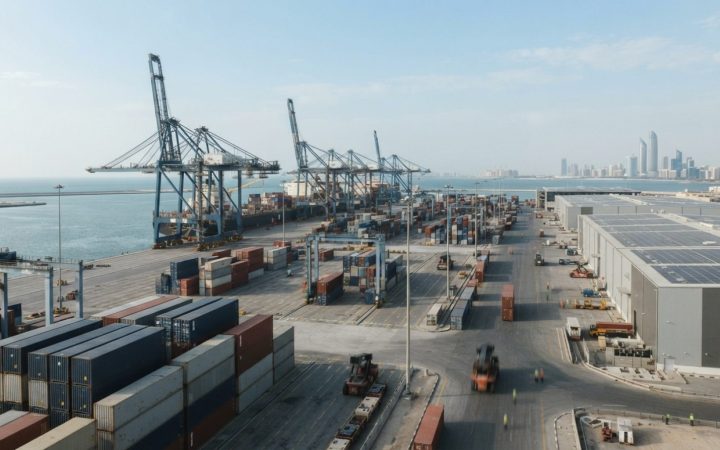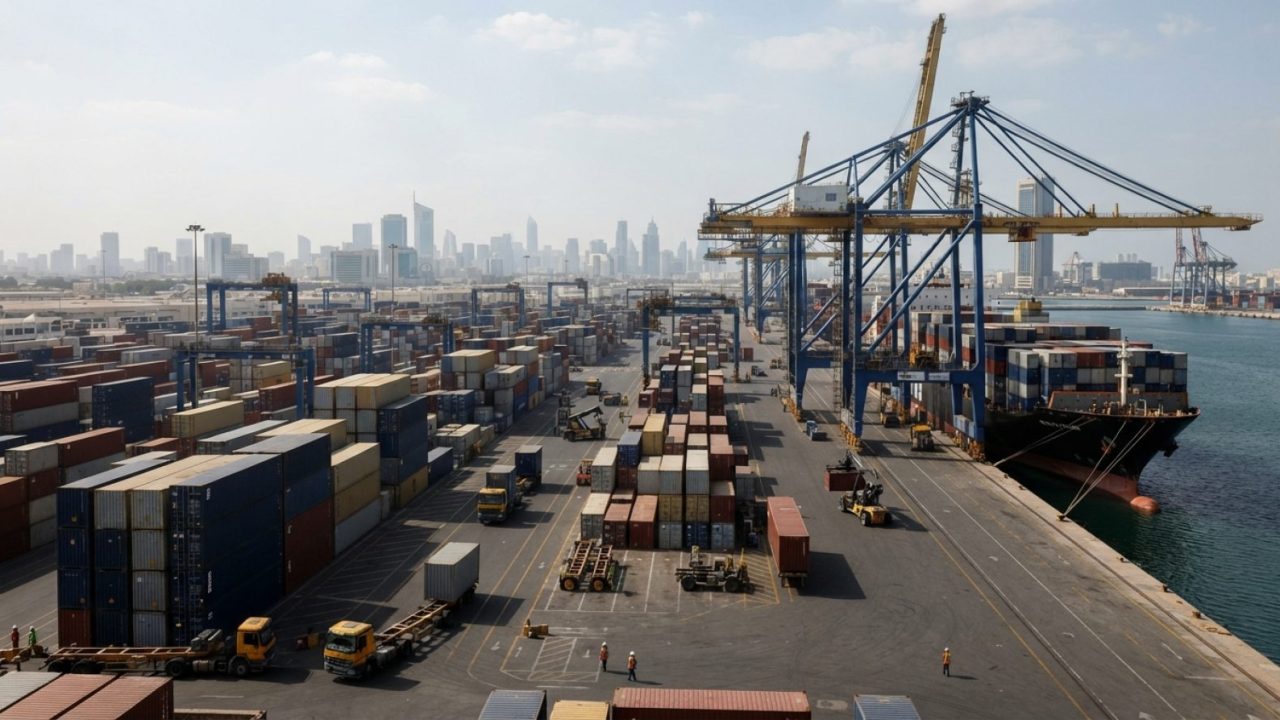
Port congestion across the United Arab Emirates has intensified, with Khor Fakkan and Sajaa in Sharjah facing severe operational delays that are extending across domestic supply chains, according to a report by Kuehne+Nagel. As of October 30, 2026, the average waiting time for vessels at Khor Fakkan reached 7.25 days, with ships over the past 30 days arriving an average of 7.4 days behind schedule and departing 5.7 days late.
Restrictions remain in effect at Khor Fakkan on the discharge of foreign cargo, dangerous goods, and special equipment, Kuehne+Nagel stated. In Sharjah, vessels faced berth waiting times of approximately three days as of October 30, with average arrival and departure delays both exceeding four days over the preceding 30 days.
Operational disruptions have spread beyond quaysides into inter-terminal domestic transport. Transfer times for cargo moving from Khor Fakkan and Fujairah to Jebel Ali, Sharjah, and Abu Dhabi have risen from roughly five days to between 12 and 15 days, constraining container yard capacity.
According to Kuehne+Nagel, some shipping lines are reducing allocation quotas for Khor Fakkan and Sharjah, though carriers have not implemented widespread direct port omissions. Demand for alternative overland transit, including landbridge solutions, is rising as cargo owners seek to bypass chokepoints.
The logistics provider stated that conditions are expected to deteriorate further in the coming weeks, driven by high Middle East import volumes, precautionary inventory stockpiling, and terminal yard congestion.
Sources
- Kuehne+Nagel · 2026-10-30