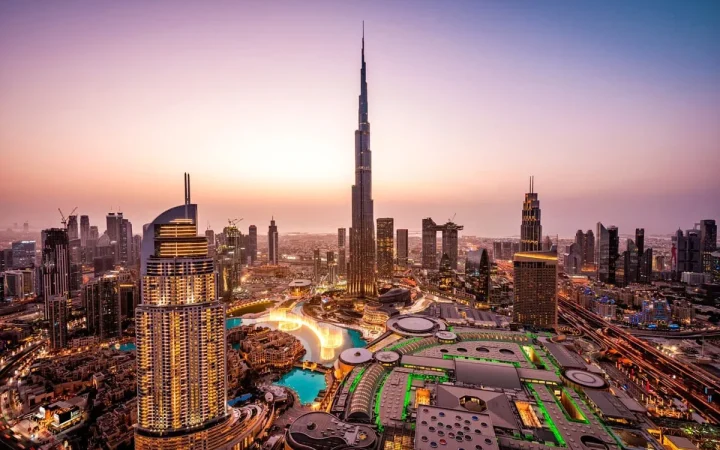
Foreign direct investment (FDI) inflows into the United Arab Emirates reached $45.6 billion in 2024, representing a 48.7% increase compared to $30.7 billion recorded in 2023, according to an analysis published by Analytics Insight. The publication attributes this increase to expanding international interest in the UAE's business ecosystem, physical and digital infrastructure, and an evolving range of commercial opportunities.
The country's economy continues to shift beyond oil, with non-oil sectors such as tourism, finance, transport, construction, and technology playing an expanding role. Analytics Insight noted that the World Bank anticipates non-oil activity will remain a central economic growth driver, supported by sustained capital investment, regulatory business reforms, and infrastructure development.
Artificial intelligence and high-tech infrastructure are forming a key part of the UAE's economic agenda. Capital allocations toward data centres, cloud computing, graphics processing units (GPUs), and digital connectivity are supporting the transition toward an AI-driven economy. The World Bank has designated the UAE as one of the Gulf region's leaders in AI readiness and digital transformation.
Financial technology is also expanding as part of the country's diversification strategy. The official UAE Investor Navigator identifies fintech as a primary growth sector alongside information and communications technology (ICT), logistics, tourism, manufacturing, renewable energy, gaming, and smart cities. In parallel, Comprehensive Economic Partnership Agreements (CEPAs) with countries in Asia, Europe, and other regions continue to widen market access under the country's 2031 vision.
Sources
- Analytics Insight · 2026-09-25