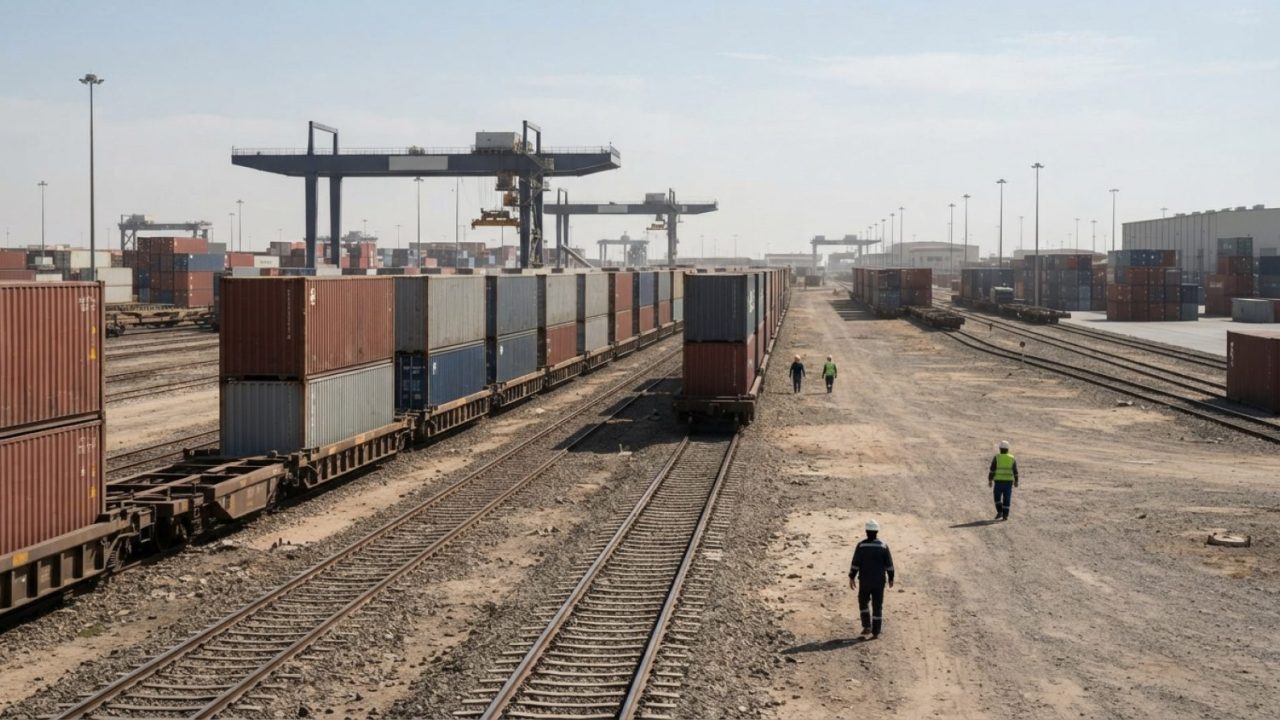
Kazakhstan, Uzbekistan, and the United Arab Emirates (UAE) signed a Memorandum of Understanding (MoU) on September 30, 2026, for the Central Asia-South Asia (CASA) railway project, according to an analysis published by Daily Sabah. The corridor is planned across the Kazakhstan-Uzbekistan-Afghanistan-Pakistan route, aiming to provide landlocked Central Asian nations with direct rail connectivity to Pakistan's seaports of Karachi and Gwadar.
Under the trilateral agreement, the parties agreed to conduct technical and economic studies, assess the feasibility of railway infrastructure and auxiliary facilities, and create a joint working group to evaluate technical, economic, and financial aspects. Daily Sabah reported that the document does not set out a definitive construction schedule, a total cost projection, or a finalized financing package.
Statements from Kazakhstan indicate that CASA is projected to transport up to 10 million tons of cargo annually toward Pakistani ports. A central element of this southern connectivity initiative is the Trans-Afghan railway, pursued by Uzbekistan, Afghanistan, and Pakistan to link Termez with Pakistan.
Within Afghanistan, the planned Mazar-i-Sharif-Torkham railway segment is designed to extend approximately 760 kilometers. Feasibility assessments for this segment began in 2025, with projected transport capacity estimated at approximately 20 million tons. According to updated figures published by Uzbekistan in June 2026, the cost of the Trans-Afghan rail project has risen above $7 billion.
Daily Sabah highlighted that while the UAE brings relevant logistics and investment background to the framework, no committed investment figure from Abu Dhabi has been specified in current documents. The outlet noted that the corridor's long-term commercial viability will depend on predictable transit durations, border operation efficiency, security conditions, and maintaining competitive freight rates compared with alternative routes.
Sources
- Daily Sabah · 2026-10-19