
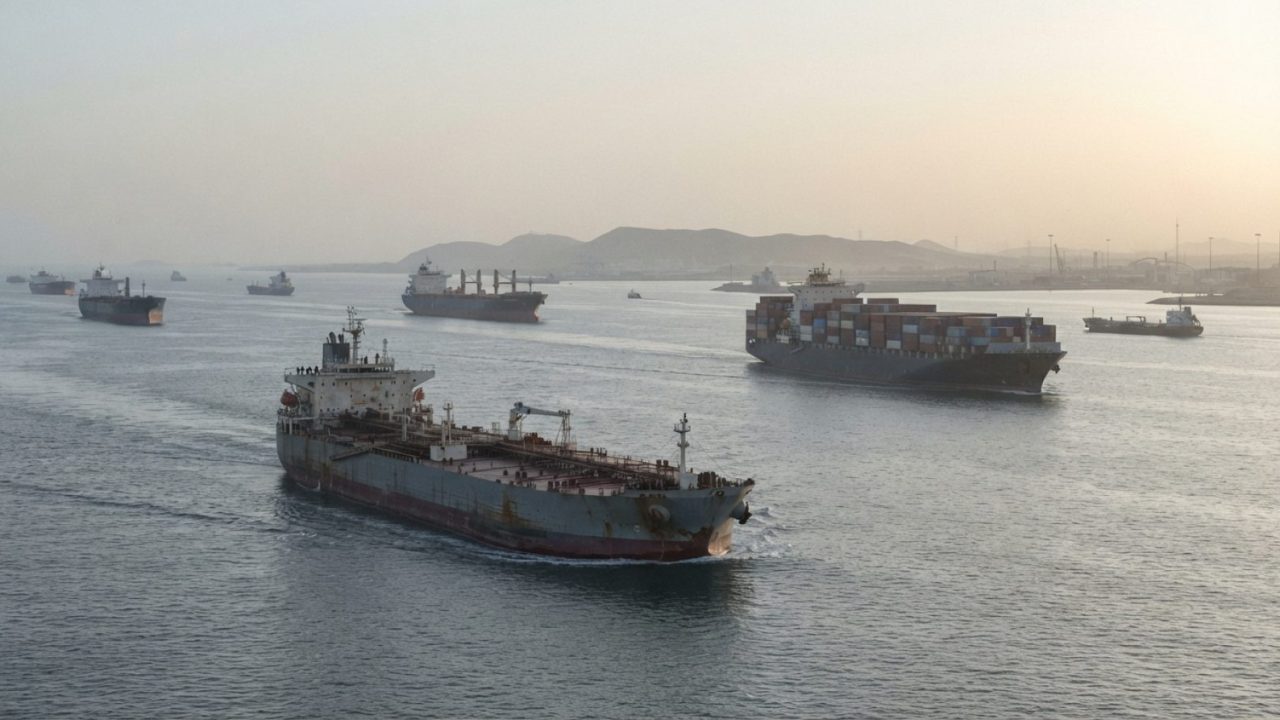
Gulf Cooperation Council (GCC) officials rejected assertions that the Strait of Hormuz could become irrelevant in the coming years, affirming that the maritime corridor remains critical for international commerce and global energy supplies despite initiatives to construct alternative trade routes, The New Indian Express reported.
Speaking at the fourth edition of the Gateway Gulf conference in Bahrain, GCC Secretary General Jassim Mohammed Al-Budaiwi stated that maintaining an open waterway is the shared responsibility of the international community under international law and the 1982 United Nations Convention on the Law of the Sea. He noted that planned pipelines and the GCC railway will not diminish the strategic importance of the Strait.
Bahrain's Minister of Finance and National Economy, Sheikh Salman bin Khalifa Al Khalifa, characterized the waterway as non-negotiable, stating that three GCC member states depend on the corridor as their only sea access. Sheikh Salman noted that roughly 30% of global liquefied natural gas exports, 27% of aluminium exports, and 30% of fertiliser exports transit the waterway.
UAE Minister of Economy and Tourism Abdullah bin Touq Al Marri affirmed that the Strait will continue to matter even as alternative transport options are established. He noted that the UAE is pursuing alternatives, including an East Coast corridor, stating that reliance on a single route creates trade vulnerability.
The report highlighted that the waterway has experienced severe operational disruptions since conflict involving Iran and the United States began in February 2026, affecting nearly 20% of global crude oil and gas supplies. Officials at the event called for accelerated GCC integration across transport, supply chains, power grids, and digital infrastructure.
Sources
- The New Indian Express · 2026-11-01