- Issuing authority
- Government of the Republic of Kazakhstan and Government of the Republic of Azerbaijan
- Jurisdiction
- Kazakhstan, Azerbaijan
- Publication date
- October 15, 2026
- Stage
- Final rule
- Official document
- Agreement on Cooperation for the Development of the Trans-Caspian International Transport Route
- Official source
- news.google.com
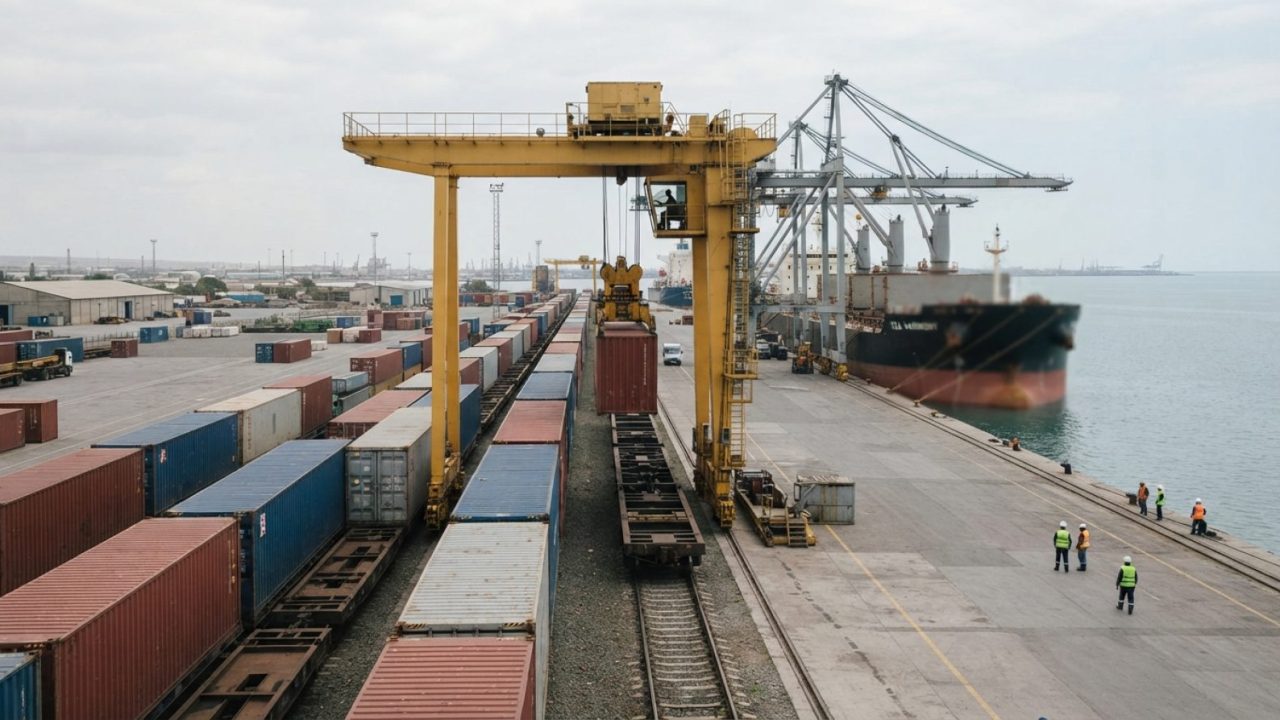
Kazakhstan and Azerbaijan have exchanged a signed intergovernmental Agreement on Cooperation for the Development of the Trans-Caspian International Transport Route (TITR, known as the Middle Corridor), establishing a unified legal framework for multimodal transport between Asia and Europe, according to official government announcements and RailFreight.com.
Exchanged in Baku during a state meeting between Kazakh President Kassym-Jomart Tokayev and Azerbaijani President Ilham Aliyev, the accord sets binding commitments to eliminate operational bottlenecks across the rail, highway, and maritime segments linking the two nations.
Under the agreement, both governments plan to implement large-scale digitalisation across freight corridors. Key initiatives include the integration of IT transport databases, rollout of a 'single-window' documentation clearance standard, end-to-end cargo track-and-trace systems, and a mutual recognition mechanism for electronic digital signatures.
To expedite transit cargo velocity, the framework standardises customs and administrative formalities through advance electronic data submissions, reduced physical inspection ratios, and mutual recognition of Authorised Economic Operator (AEO) status by border agencies.
The document also covers maritime cooperation in the Caspian Sea, focusing on expanding the commercial shipping fleet and coordinating joint dredging operations to maintain harbour navigability, creating a standardised operating blueprint that other corridor transit nations can join.
Sources
- RailFreight.com · 2026-10-20