A comparative research study authored by Chen Xiao, Wang Xingping, Dong Mingjuan, and Shi Yifeng in Frontiers of Urban and Rural Planning examines how Chinese planning standards adapt to foreign jurisdictions across Belt and Road overseas industrial parks. Applying Actor-Network Theory, the study investigates how technical specifications, spatial standards, and regulatory frameworks are modified through multi-stakeholder interactions rather than simple technical transfers.
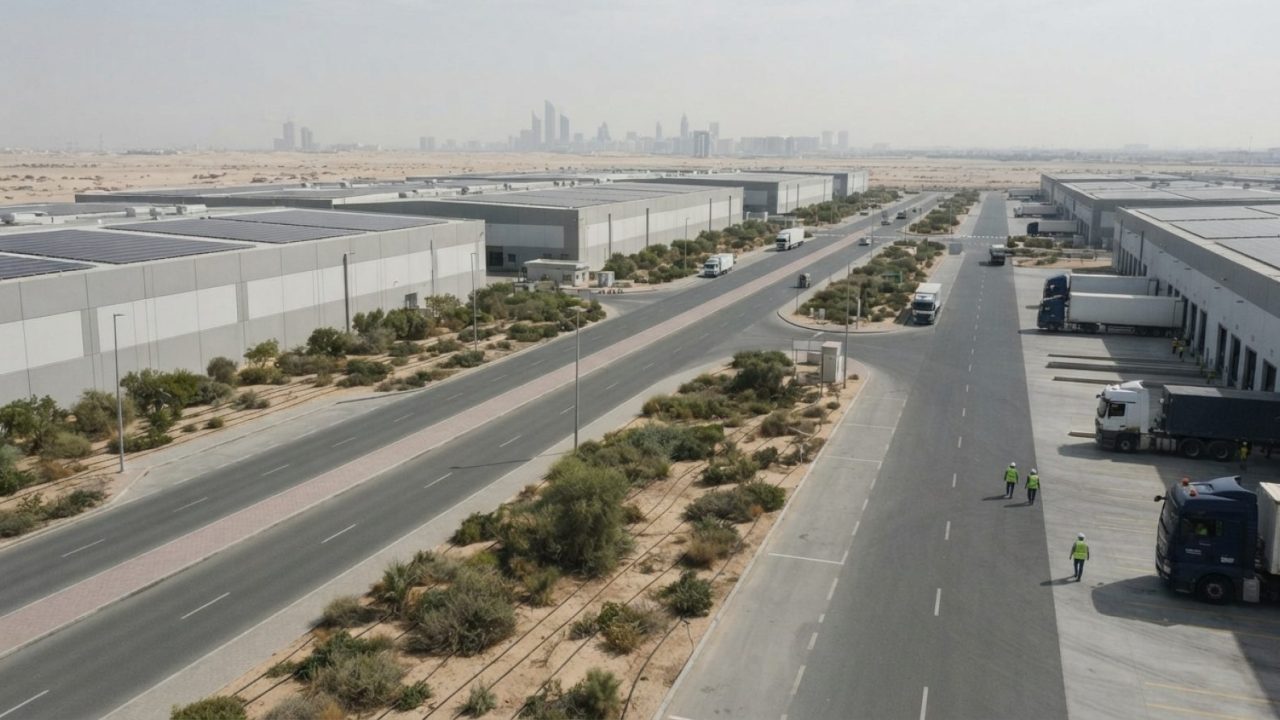
Focusing on the China-UAE Capacity Cooperation Demonstration Park in Abu Dhabi's Khalifa Industrial Zone Free Trade Zone, the authors outline a developer-led model spearheaded by Jiangsu Overseas Cooperation and Investment Company. Operating as a park-within-a-park, the project had to navigate an internationalized market where approvals are issued by the Abu Dhabi Ports Company via No Objection Certificates, governed by European and American technical benchmarks and the Abu Dhabi Urban Planning Council's Estidama Pearl Rating System.
To build local institutional alignment, the Chinese developer coordinated 13 high-level bilateral delegation visits and formed technical partnerships with Khalifa University and UAE University. Local environmental requirements led to the adoption of drip irrigation, energy-efficient building envelopes, and carbon management protocols, achieving an Estidama Pearl Rating Level 1 certification.
The study also notes that while local Abu Dhabi regulations traditionally maintained low floor area ratios and restricted mixed-use residences in industrial zones, developer negotiations successfully increased floor area ratios across industrial, warehousing, and commercial parcels to improve land utilization efficiency. In addition, cultural factors were accommodated by incorporating prayer spaces into administrative offices and staff dormitories.
Sources
- Bioengineer.org · 2026-11-12