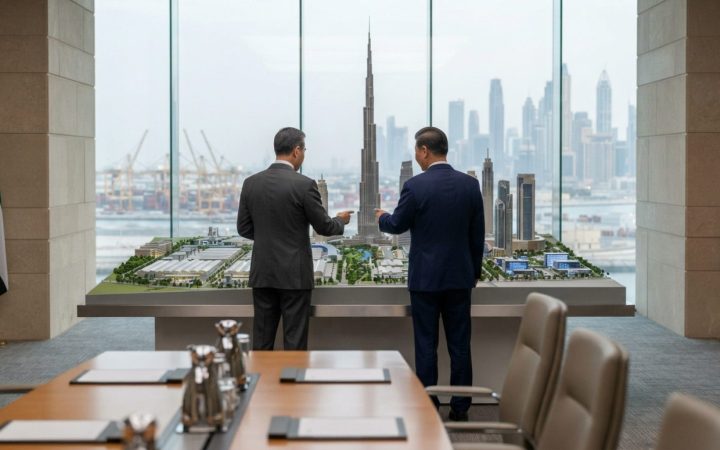

The UAE and Singapore are serving as key testing environments for stablecoins and cross-border digital settlement, supported by early digital-asset regulations and financial infrastructure, experts reported at the First Abu Dhabi Bank (FAB) Middle East-Asia Summit in Singapore. Stablecoins are expanding beyond cryptocurrency trading into commercial payments, cross-border settlements, and corporate treasury management, according to The National.
Nischint Sanghavi, Visa's head of digital currencies for the Asia-Pacific region, stated at the summit that payment networks are actively integrating stablecoins into traditional payment rails. He explained that Visa's strategic focus is to ensure interoperability across various forms of money and financial infrastructure, positioning stablecoins to function in parallel with commercial banks rather than replacing them.
SB Seker, head of APAC at Binance, noted during a panel that the Asia-Pacific region represents the fastest-growing digital asset market globally, posting annual growth of approximately 69 to 70 percent. He observed that merchants are increasingly choosing stablecoins for instant settlement over conventional correspondent banking networks, while multinational corporations are evaluating digital currencies for internal treasury movements across borders.
Panel participants cautioned that token delivery speed must translate into usable liquidity to provide real business value. Industry experts pointed out that while blockchain transfers occur within seconds, foreign exchange conversion, local compliance, and local payout remain essential steps. As a result, the most significant business impact lies in reducing trapped working capital rather than raw transaction speed alone.
Sources
- thenationalnews.com · 2026-09-25
- Gemini News Search — Policy & Legal Updates · 2026-09-25