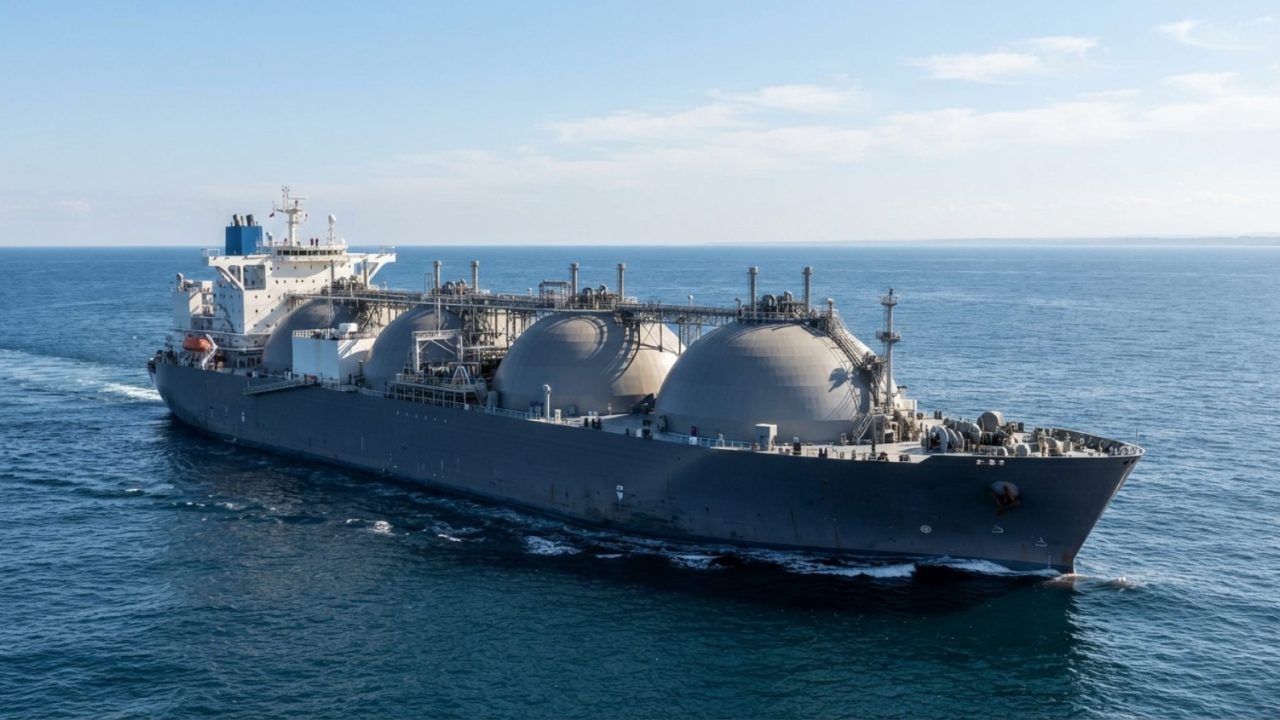
China's Jiangnan Shipyard has delivered the very large ammonia carrier (VLAC) Nurai to UAE-based AW Shipping, according to Baird Maritime. AW Shipping is a maritime joint venture established by Abu Dhabi's ADNOC Logistics and Services (ADNOC L&S) and China's Wanhua Chemical Group.
Nurai is the second of four 93,000-cubic-metre VLACs that AW Shipping ordered from the Chinese yard. AW Shipping contracted its initial two VLACs in July 2024 for approximately US$250 million alongside nine 99,000-cubic-metre ethane carriers, before exercising options for two additional VLACs valued at US$250 million in October 2024.
Both Nurai and lead ship Ivy Cove—delivered to Singapore's Eastern Pacific Shipping (EPS) in June 2024 and chartered to Trafigura—are derivatives of Jiangnan's fourth-generation very large gas carrier design. The Liberian-flagged vessels are engineered for long-distance ammonia transport and can also load full cargoes of propane, butane, and other LPG products, with the ability to carry two grades of liquefied gas simultaneously.
According to Lloyd's Register specifications cited in the review, the vessel features an overall length of 229.165 metres, a moulded beam of 36.5 metres, a maximum draught of 13.047 metres, and a deadweight of 66,615 tonnes. The cargo containment system incorporates four reinforced independent Type A tanks to handle dense, corrosive anhydrous ammonia.
Jiangnan Shipyard stated that each vessel is equipped with an LPG dual-fuel main engine, a shaft generator, and reserved space and interfaces for future conversion to ammonia propulsion. The shipyard reported that the machinery configuration satisfies EEDI Phase III standards, reducing carbon dioxide emissions by approximately 20 per cent and sulphur oxide emissions by 99 per cent.
Sources
- Baird Maritime · 2026-11-17