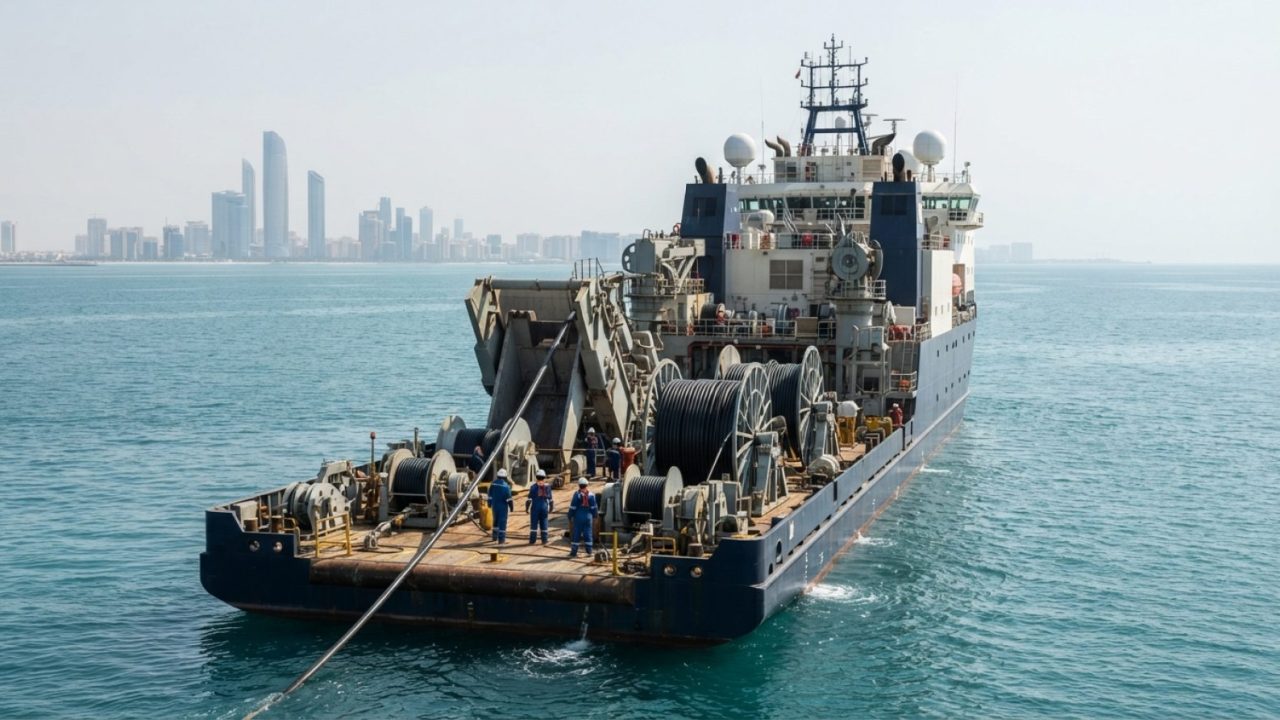
Installation work on four planned subsea cable systems in the Gulf has been paused due to regional conflict, Infoblox head of internet analysis Doug Madory told EnterpriseAM. The halted projects include 2Africa Pearls, the Gulf extension of SeaMeWe-6, Ooredoo's Fibre in Gulf, and the WorldLink Transit Cable. None of the subsea cables currently operating in the region have suffered damage so far.
Geopolitical risks along the seabed have intensified, with Islamic Revolutionary Guard Corps spokesperson Hossein Mohebbi referencing seven major internet cables beneath the Strait of Hormuz. Windward maritime tracking identified at least four Iranian-linked vessels conducting unusual movements near subsea cable routes in the Gulf of Oman, which analysts noted could be consistent with cable reconnaissance, though Windward stressed that the exact purpose remains unconfirmed.
TeleGeography regional assessments indicate that Iraq, Bahrain, Qatar, and Kuwait rely heavily on the Strait of Hormuz for direct submarine connections. In contrast, the United Arab Emirates maintains submarine landing stations at Fujairah outside the Persian Gulf, and the majority of Saudi Arabian international bandwidth lands along the Red Sea coast. However, industry assessments caution that terrestrial and overland networks may lack sufficient capacity to absorb all traffic in the event of an offshore disruption.
Long-term infrastructure investment remains ongoing despite regional instability, with Microsoft planning to deploy more than USD 400 million into Middle East submarine and terrestrial connectivity by 2030, including through the SeaMeWe-6 system. TeleGeography noted, however, that SeaMeWe-6's planned path through the Gulf to Bahrain and overland across Saudi Arabia has faced delays due to regional friction.
Sources
- EnterpriseAM · 2026-11-17