
- Issuing authority
- Dubai Supreme Council of Energy / Dubai Electricity and Water Authority
- Jurisdiction
- Dubai, United Arab Emirates
- Publication date
- November 26, 2026
- Stage
- Final rule
- Official document
- Dubai Net Zero Carbon Emissions Strategy 2050 / D33 Industry Friendly Power Policy
- Official source
- news.google.com
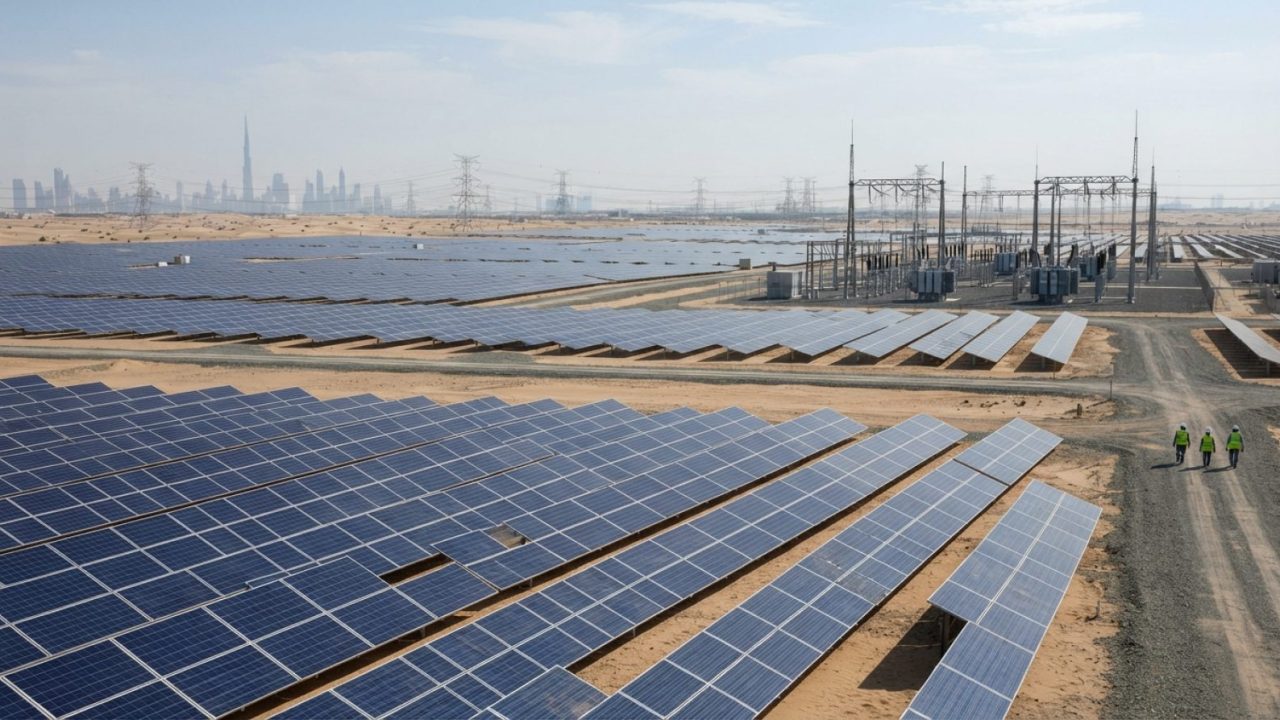
Dubai's Net Zero 2050 framework and the Clean Energy Strategy set an emirate-level pathway to achieve 100% clean energy production capacity by 2050, alongside an interim target to reduce citywide carbon emissions by 50% against 2018 levels by 2030. According to an analysis by sustainability advisory firm Spectreco, these targets intersect with mandatory legal compliance under the UAE federal Climate Law, which requires every UAE commercial and public entity to measure, report, and reduce greenhouse gas emissions.
The transition framework operates via two coordinated roadmaps: the Dubai Clean Energy Strategy 2050 and the Dubai Net Zero Carbon Emissions Strategy 2050, originally formulated through studies by the Dubai Future Council on Energy. The strategy is reinforced by the Demand Side Management Strategy 2050, which targets electricity and water demand reductions against business-as-usual benchmarks of at least 30% by 2030 and 50% by 2050.
Spectreco highlights that clean energy reached 25.8% of Dubai's total power mix in 2026, up from 16.1% at the end of 2023, surpassing the city's original 2030 milestone four years ahead of schedule. As a result, Dubai has raised its 2030 clean energy capacity target to roughly 36%. The Mohammed bin Rashid Al Maktoum Solar Park reached an operating capacity of 3,860 MW in early 2026 and is scheduled to exceed 8,000 MW by 2030.
To align corporate operations with the Dubai Economic Agenda D33, DEWA introduced the D33 Industry Friendly Power Policy. Under this policy, qualifying manufacturers, agri-tech enterprises, and data centres can install on-site solar systems, export excess electricity to the grid at 10.5 fils per kilowatt-hour, and obtain priority access to renewable energy certificates, subject to joint certification from DEWA, the Department of Economy and Tourism, and the Department of Finance.
Sources
- Spectreco · 2026-11-26