- Issuing authority
- US Bureau of Industry and Security
- Jurisdiction
- United States
- Effective date
- July 1, 2026
- Stage
- Final rule
- Official source
- news.google.com
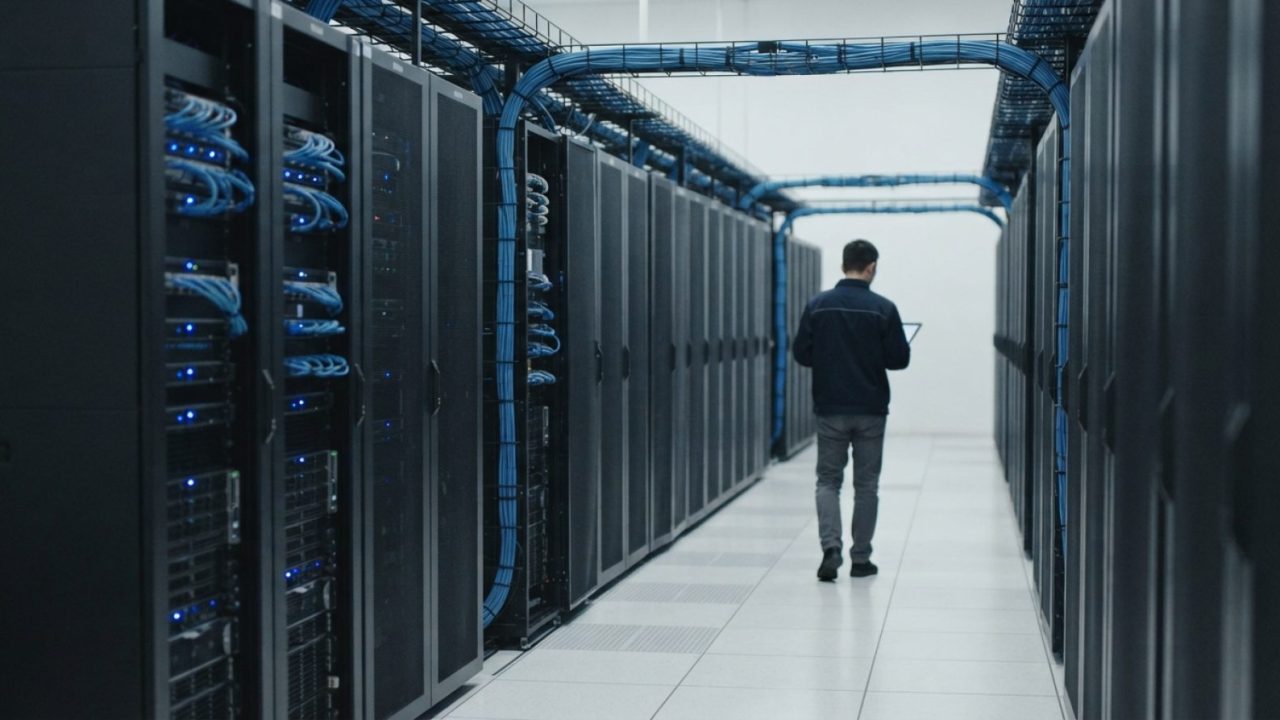
According to an analysis published by IR Insider, shortages of computing power are exposing the limits of technological self-sufficiency across the global artificial intelligence sector. Reporting cited from The Wall Street Journal highlighted emerging partnerships between rivals such as Anthropic and xAI to secure scarce compute capacity, illustrating how access constraints are altering competitive dynamics and challenging traditional notions of AI sovereignty.
In the United Arab Emirates, Washington and Abu Dhabi announced the US-UAE AI Acceleration Partnership in May 2025, which encompasses a 5-gigawatt AI Campus built and operated alongside major US technology firms. The facility is designed to deliver hyperscaler services to populations living within 3,200 kilometres of the UAE, yet the US retains authority over licensing terms and advanced hardware access. In July 2026, the US Bureau of Industry and Security eased export controls, granting select approved Emirati entities and the UAE government license-free access to advanced chips and servers under US rules.
In China, state-backed efforts have focused on domestic technology manufacturing to counter US trade and export controls. Huawei has expanded shipments of its Ascend AI accelerators and introduced next-generation systems, but product demand continues to outpace available supply, and domestic manufacturers face shortages of high-bandwidth memory.
The publication concludes that national AI sovereignty has shifted from achieving total technological independence toward managing external dependencies and securing supply access. IR Insider notes that future strategic autonomy will depend on domestic semiconductor production, supplier diversification, and the ability of intermediate economies to control operational infrastructure.
Sources
- IR Insider · 2026-10-19