- Issuing authority
- Department of Municipalities and Transport
- Jurisdiction
- Abu Dhabi, United Arab Emirates
- Publication date
- November 24, 2026
- Stage
- Final rule
- Official document
- Livability by Design Framework
- Official source
- news.google.com
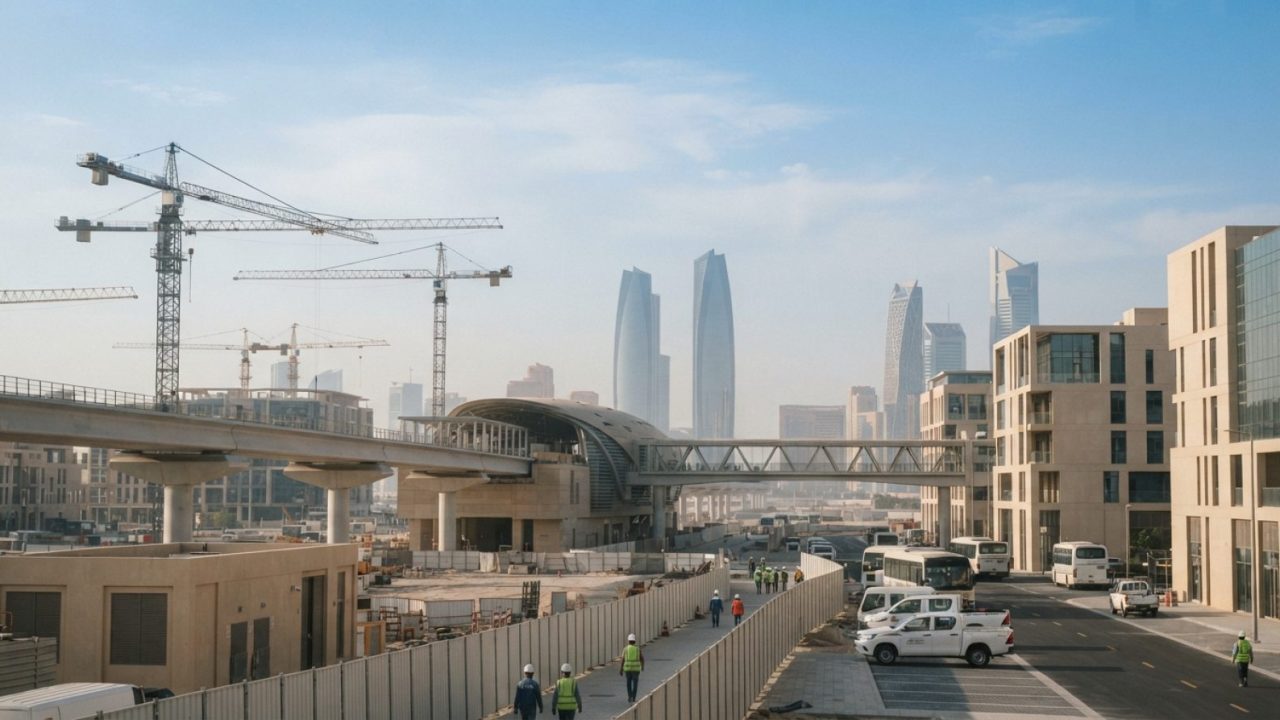
Abu Dhabi has established an integrated urban development model linking economic competitiveness with quality of life, according to reports from the Emirates News Agency (WAM). The Department of Municipalities and Transport (DMT) oversees the framework, which integrates urban planning, licensing, infrastructure, mobility, real estate regulation, and asset management to support sustained economic and demographic growth. Abu Dhabi's non-oil sector currently contributes over half of the emirate's gross domestic product.
Economic and real estate activity showed substantial growth in 2026. In the first quarter of 2026, new economic licences grew by 21 percent year-on-year, while active licences expanded by 12 percent. In the real estate sector, foreign direct investment reached AED 13.8 billion during the first half of 2026, an increase of 309 percent that surpassed the total recorded for the full year 2025. Non-resident investors from 116 nationalities participated in the market during the period.
Under DMT's Liveability Strategy, 60 projects with a budget of AED 12 billion were completed in the first phase as part of a wider AED 42 billion programme, raising Abu Dhabi's District Completion Index from 67 percent to 84 percent over two years. A subsequent five-year phase focuses on measuring facility operational quality and impact. Acting Undersecretary of DMT Adel Abdulla Albreiki stated that the model seeks to enhance urban readiness, improve efficiency, and offer investors long-term certainty.
Permit and development processing times have also shortened. In the first half of 2026, the department approved 43.6 million square metres of floor area—a 40 percent increase—while cutting master developer approval cycles by 60 days. In addition, the Binaa digital platform decreased building permit processing durations by approximately 70 percent. In 2026, DMT introduced the 'Livability by Design Framework' for master plans catering to more than 2,000 residents, incorporating walkability and transit connectivity benchmarks.
To expand private-sector involvement, DMT launched the Government Assets Investment Service on the TAMM platform, utilizing artificial intelligence and geospatial data to present government land and asset opportunities to investors. Furthermore, the Abu Dhabi Investment Office and the Abu Dhabi Projects and Infrastructure Centre have brought to market an AED 55 billion public-private partnership pipeline comprising 24 projects across transport, infrastructure, and social sectors for 2026 and 2027.
Sources
- Big News Network.com · 2026-11-24