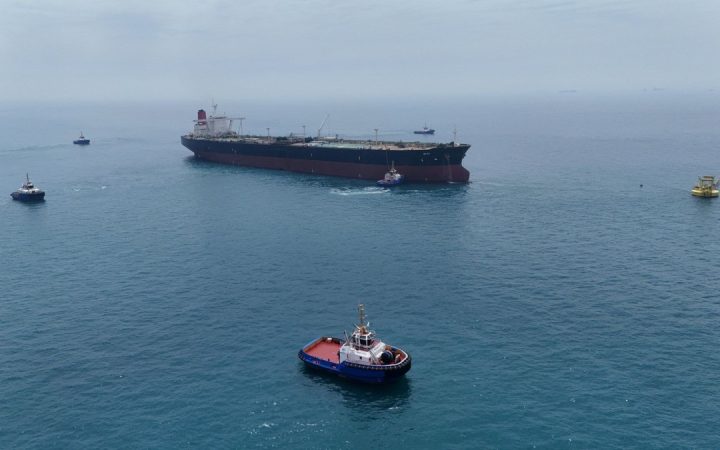
According to an analysis published by The National and reported by UA.NEWS, China derives strategic advantages as the United States commits substantial military assets—estimated at approximately one-third of the US Navy—to the conflict with Iran without a clearly defined end goal. While Persian Gulf shipments of oil and cargo have increased, they remain below pre-war levels, prolonging political pressure on Washington.
Despite allegations cited by the publication that China provided satellite imagery and dual-use drone and missile components to Iran, the analysis highlights that Beijing has strong incentives to prevent prolonged disruption to Gulf shipping. China maintains major commercial assets and investments in the UAE, Saudi Arabia, Qatar, Oman, and Iraq, making the Gulf Cooperation Council (GCC) states and Iraq collectively more significant to Beijing as economic partners, markets, and energy suppliers than Iran.
The report also points to China's diplomatic balancing role, referencing its facilitation of the 2023 rapprochement between Riyadh and Tehran. Beijing remains averse to extensive attacks on Gulf energy infrastructure that could endanger regional stability.
Regarding energy security, the publication observes that China, as the world's largest oil and gas importer, has cushioned itself against liquefied natural gas disruptions from Qatar by relying on coal, nuclear power, renewables, and pipeline gas from Russia and Central Asia. The report adds that China has drawn on strategic crude reserves built up over the previous year, while independent Chinese refiners have purchased discounted Iranian crude.
Sources
- UA.NEWS · 2026-09-27