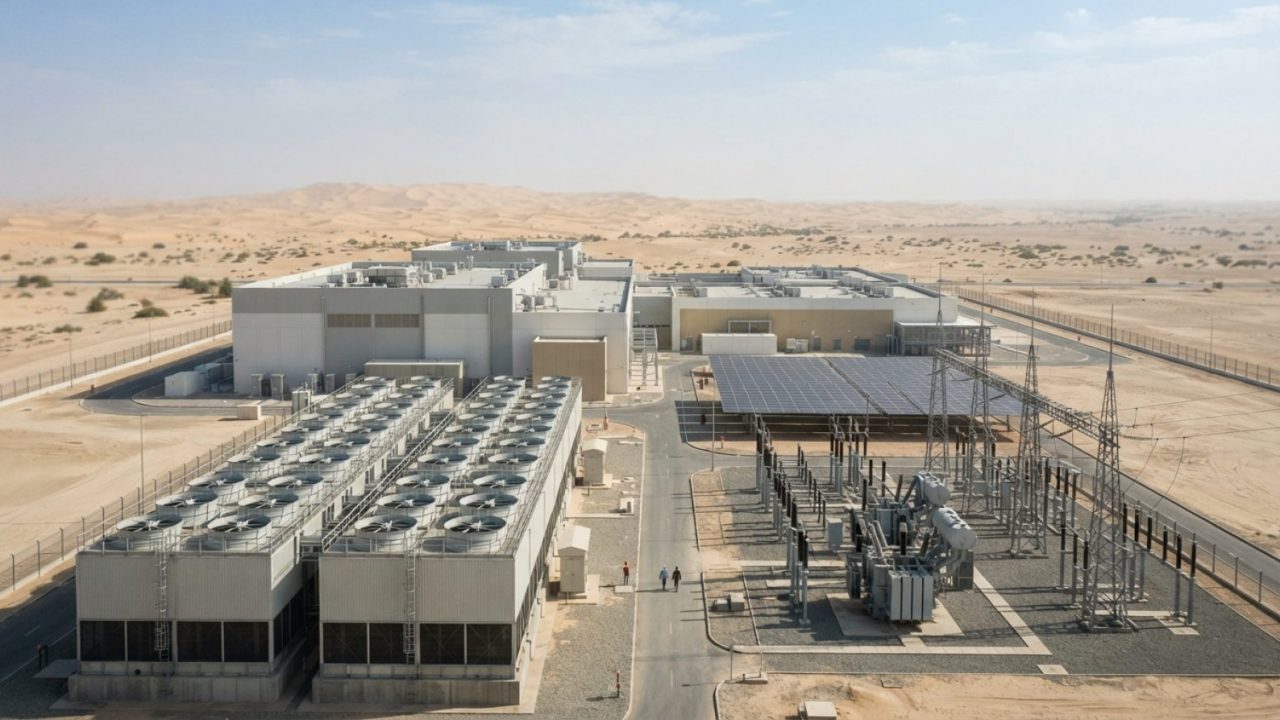
According to a strategic intelligence assessment published by Debuglies, the United Arab Emirates and Saudi Arabia are rapidly expanding sovereign artificial intelligence compute capacity to diversify beyond hydrocarbon revenues. The UAE's flagship initiative, Stargate UAE—announced on May 22, 2025, by a consortium comprising G42, OpenAI, Oracle, Nvidia, Cisco, and SoftBank Group—targets a 1 GW computational cluster within a planned 5 GW UAE–U.S. AI Campus in Abu Dhabi, with an initial 200 MW phase planned for 2026. Complementing hardware investments, Abu Dhabi's Technology Innovation Institute released specialized Arabic models including Falcon-Emirati in October 2026, while the Mohamed bin Zayed University of Artificial Intelligence deployed its 70-billion-parameter K2 Think V2 model in January 2026.
In parallel, Saudi Arabia has progressed on its HUMAIN program. On August 31, 2026, AMD, Cisco, and HUMAIN announced that computing infrastructure incorporating AMD Instinct MI355X accelerators, AMD EPYC processors, and Cisco Silicon One networking entered production service, aiming for 250 MW starting in 2027 and up to 1 GW by 2030. On November 9, 2026, Saudi Arabia's National Infrastructure Fund announced two financing agreements with HUMAIN totaling up to SAR 2.5 billion (approximately USD 667 million) to support regional compute and data infrastructure expansion.
The assessment highlights that Chinese technology ecosystems maintain an active presence alongside Western platforms in the Gulf. Huawei operates a Riyadh cloud region launched in September 2023 with three availability zones and Class C certification, demonstrating the coexistence of Chinese and American digital ecosystems without shared underlying infrastructure. Meanwhile, regulatory controls continue to govern Gulf access to US technology; a July 2026 amendment to the US Export Administration Regulations designated G42 and Core42 among eligible Emirati entities authorized to receive defined advanced computing items under specific conditions without individual licenses.
Debuglies concludes that while Gulf states can control physical power generation, land, and data center facilities domestically, advanced accelerators, high-bandwidth memory, semiconductor manufacturing, and frontier model intellectual property remain concentrated in foreign corporate and regulatory jurisdictions. As a result, the report argues that large-scale infrastructure investments risk consolidating external technological dependencies unless Gulf entities can establish proprietary intellectual property and commercially viable, independent software ecosystems.
Sources
- https://debuglies.com · 2026-11-25