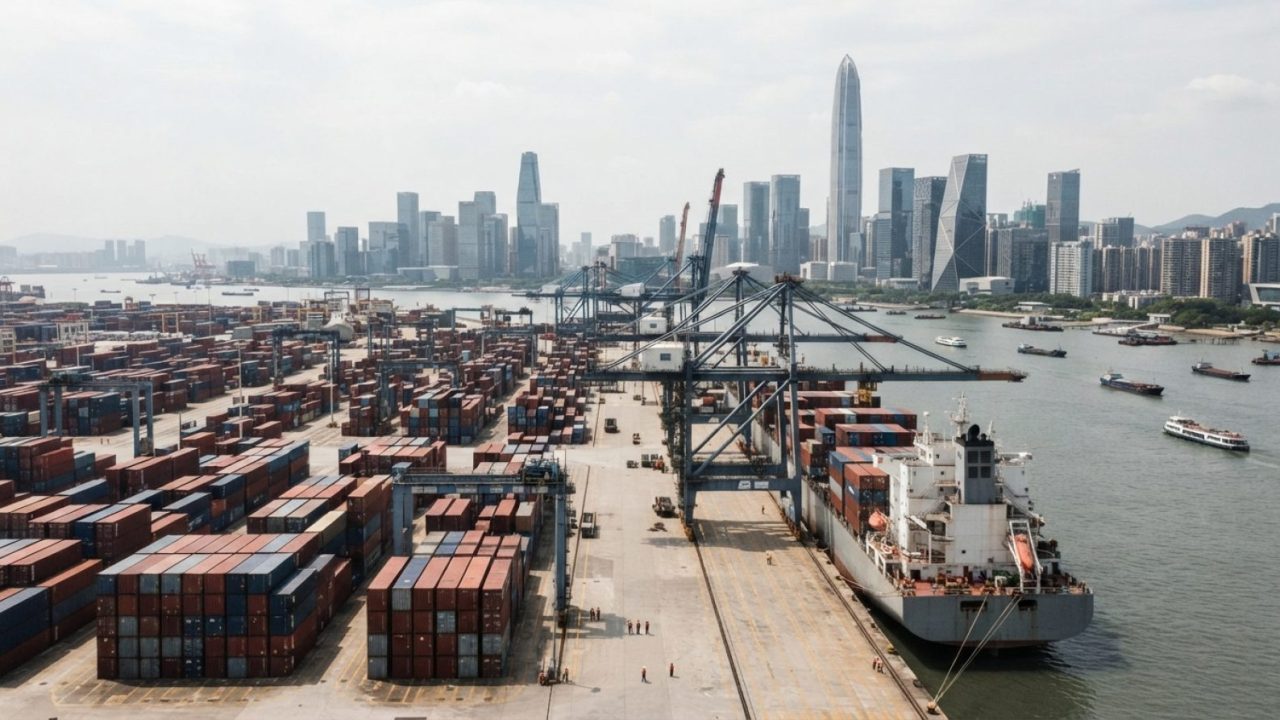
U.S. President Donald Trump, Chinese President Xi Jinping, and Russian President Vladimir Putin are holding a trilateral meeting in Shenzhen, China, on the sidelines of the Asia-Pacific Economic Cooperation (APEC) leaders' summit. According to briefings from China's Foreign Ministry, the discussions focus on international peace and strategic stability, while White House officials indicated that discussions would address regional security conflicts, including the Iran war and nuclear non-proliferation.
For Middle Eastern economies, regional energy stability remains a core consideration. With the conflict involving Iran in its ninth month, regional energy routes and maritime shipping face continued disruption, leading Gulf states to monitor how major-power diplomatic engagements might impact regional navigation and energy trade.
Technology access and computing governance represent another critical priority for Gulf economies. As countries including the UAE and Saudi Arabia invest substantially in artificial intelligence data infrastructure, recent U.S. Commerce Department measures restricting foreign access to advanced computing technology through overseas facilities highlight the cross-border regulatory stakes of major-power diplomacy.
Market analysts cited by CNBC urged caution regarding concrete deliverables from the summit. David Roche, strategist at Quantum Strategy, told CNBC's "Access Middle East" that the gathering provides an important geopolitical platform for Beijing but is unlikely to yield major binding pacts, while strategists at Evercore ISI noted that disagreements over the formal agenda represent the main hurdle.
Sources
- CNBC · 2026-11-18