The Mohamed bin Zayed Water Initiative is conducting field trials in the United Arab Emirates for finalist solutions from its Al Miyah Challenge for Agriculture, China Daily reported citing the Emirates News Agency. UAE-based finalists CRETA Group and Raincatcher Technologies are deploying systems designed to lower water and energy use across agricultural operations.
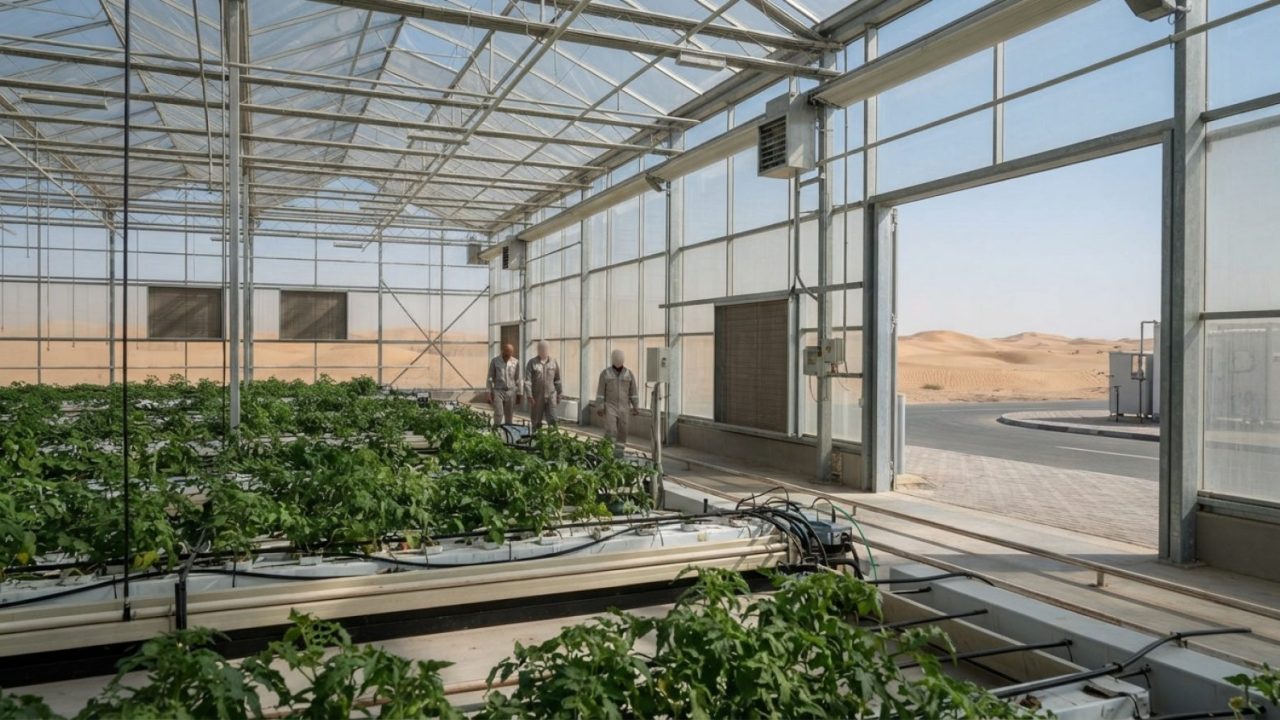
CRETA Group has developed a multi-zone greenhouse system that combines underground heat exchange, engineered airflow, differential-pressure management, and passive solar heat reduction inside a dual-shell structure. At a 520-square-metre pilot facility in Al Ain facing temperatures near 50°C, the company reported air-temperature reductions of 12 to 15°C and 30 to 40 percent lower cooling electricity use, while designing toward an 85 to 90 percent cut in cooling-water use compared with conventional fan-and-pad systems.
Raincatcher Technologies has developed a biodegradable subsurface soil improver combining superabsorbent polymers and nutrients that absorbs several hundred times its weight in water to curb losses in sandy soils. The company reported an 85 percent water saving in a 27-date-palm trial at the International Center for Biosaline Agriculture in Dubai, as well as a 20 to 25 percent reduction in water use during a sweet-corn trial at the Silal Innovation Oasis in Al Ain.
Raincatcher Technologies estimated average application costs at US$7 per date palm annually, US$5 per orchard tree, and US$600 per hectare for field crops. The company also reported water savings of 40 to 85 percent in earlier five-year trials across Türkiye, Morocco, and Kyrgyzstan.
Sources
- China Daily · 2026-11-12