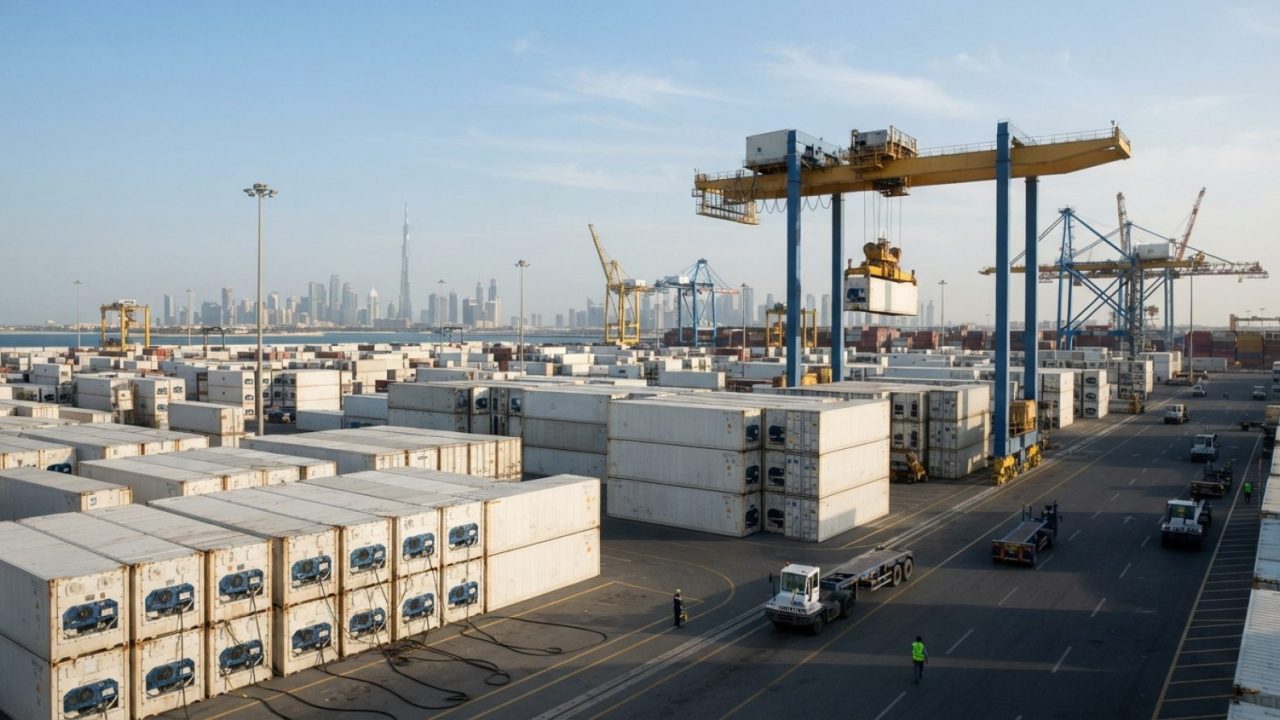
A data analysis published by Visual Capitalist, sponsored by DP World, outlines the composition of the United Arab Emirates' food imports using figures from IHS Markit. Measured by US dollar import value rather than physical volume, frozen meat ranks as the single largest category at 17.9% of total food imports.
Fruits and nuts follow at 16.7%, and packaged food represents 13.5%, meaning the top three categories collectively account for 48.2% of UAE food import value. Dairy products make up 8.3%, grains and grain products represent 6.6%, coffee and tea account for 5.7%, cooking oils contribute 5.0%, chocolate and confectionery represent 4.2%, sugar accounts for 4.1%, and vegetables make up 4.0%. All other categories, including spices, beverages, beans, lentils, and chickpeas, collectively total 13.8%.
According to the publication, four key categories—frozen meat, fruits and nuts, dairy products, and vegetables—together comprise 46.9% of import value. While exact temperature requirements differ across items, the source notes that this substantial share emphasizes the importance of cold storage and specialized handling throughout the journey from origin to shelf.
The report highlights DP World's planned Dubai Food District, an integrated ecosystem designed to unite food trade, storage, processing, and distribution. Planned facilities include cold storage, temperature-controlled warehousing, and food processing operations to streamline import flows into regional markets.
Sources
- Visual Capitalist · 2026-10-23