DP World and Japanese shipping and infrastructure group Mitsui O.S.K. Lines (MOL) have signed a term sheet for a proposed automotive logistics and processing facility at Jebel Ali Port in Dubai, according to a company statement reported by PortNews IAA. The planned facility would combine vehicle storage, pre-delivery inspection, and other value-added services at a single port-side location to support vehicle flows between Asian manufacturing centres and markets across the Middle East and Africa.
The companies have not disclosed the proposed investment amount, ownership structure, construction timetable, or targeted opening date. PortNews IAA reported that the term sheet establishes the framework for the proposed development rather than representing a final investment decision. The agreement advances a partnership initiated in December 2023, when both parties signed a memorandum of understanding to explore finished vehicle logistics and maritime decarbonisation.
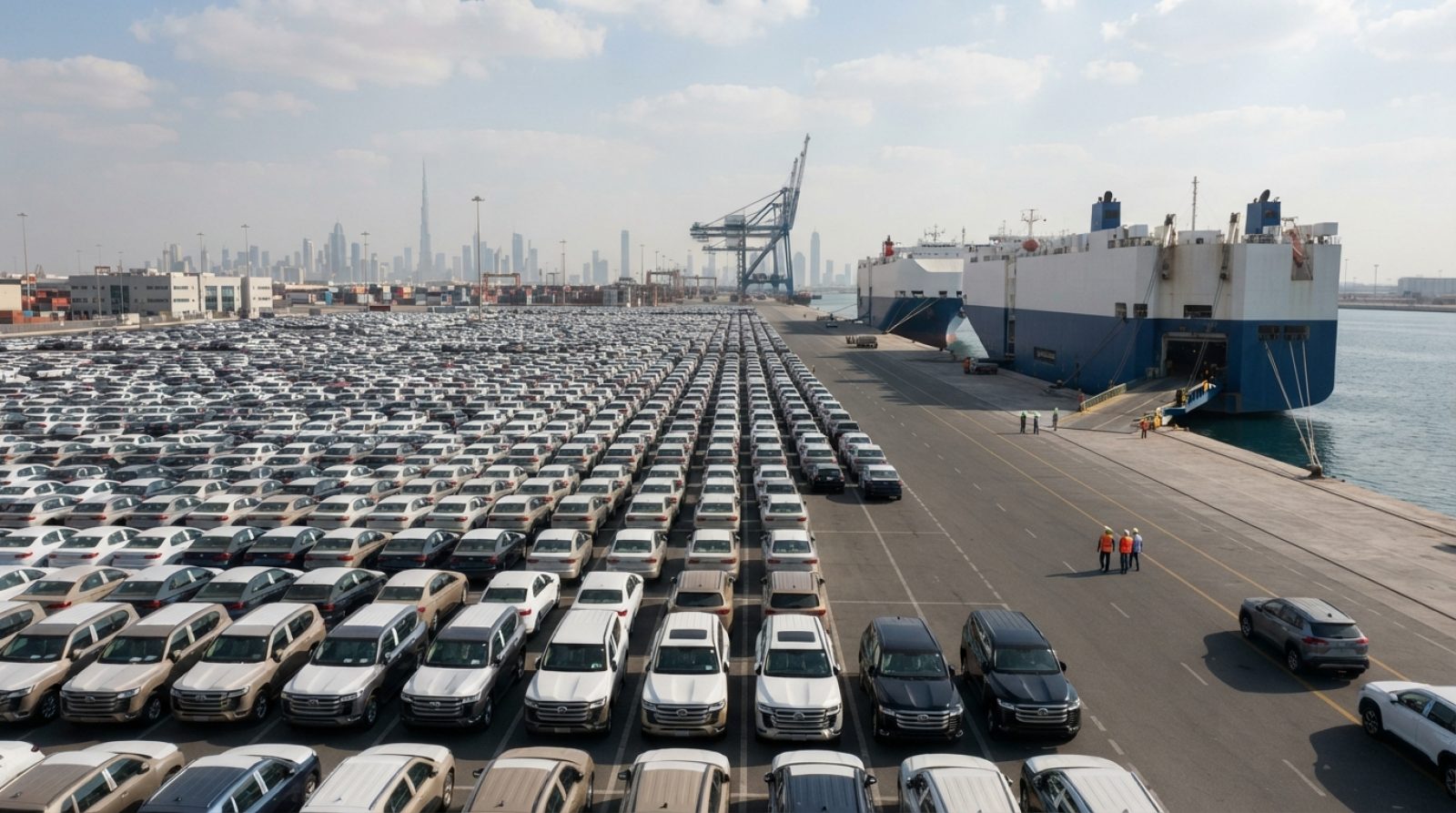
Jebel Ali Port handled nearly 1.1 million vehicles in 2025. In the first half of 2025, the port handled 545,000 vehicles, reflecting a 28% increase year on year. Imports represented 65% of that volume, with China leading imports alongside Japan, Thailand, India, and South Korea.
In August 2025, DP World expanded vehicle capacity at Jebel Ali's Terminal 4 by adding a 2.6 million-square-foot vehicle storage yard. That development added 13,000 car-equivalent units to raise total storage capacity to 75,000 units, alongside an 800-metre quay capable of handling up to three roll-on/roll-off vessels simultaneously.
Sources
- PortNews IAA · 2026-10-06