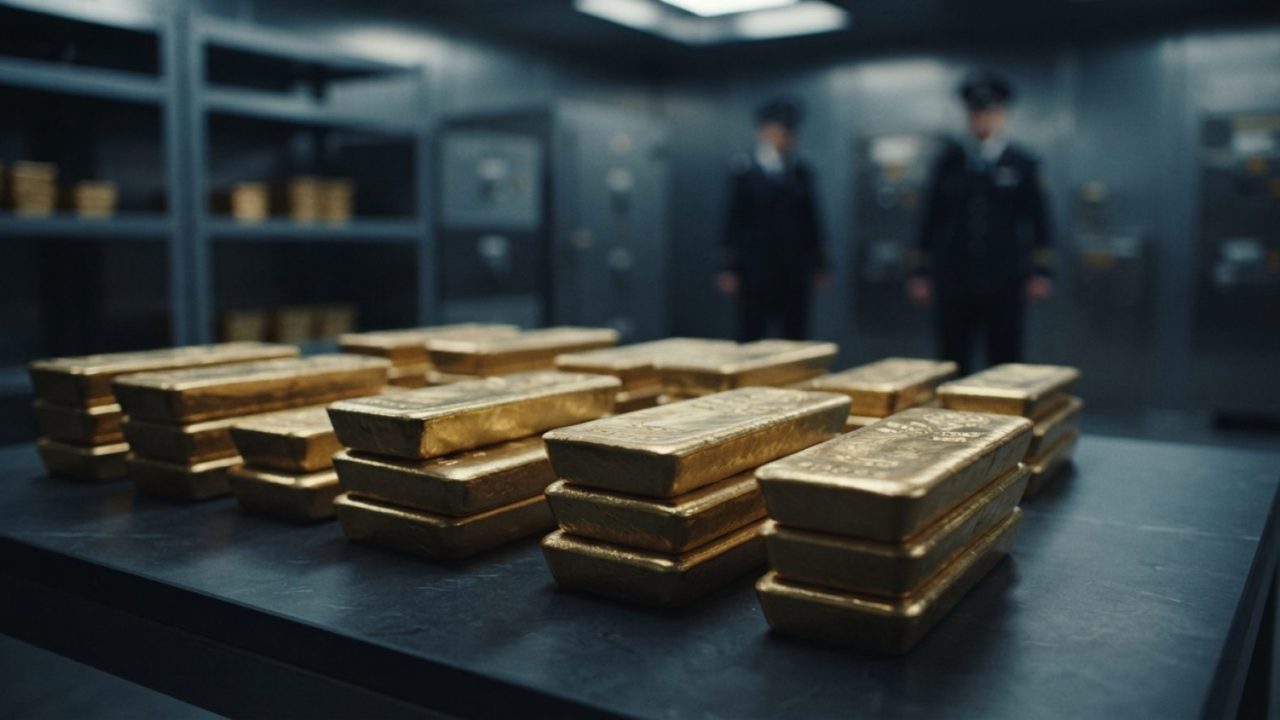
Gold has experienced significant downward momentum, dropping below $3,576.09 per ounce during trading on Friday, according to Emirates 24|7. The move marks a contraction of roughly one-third from its all-time high of $5,589.38 per ounce recorded on January 28, 2026.
Analysts attributed the trend reversal to shifting macroeconomic drivers, notably rising US Treasury bond yields, a stronger US dollar, and expectations of tighter Federal Reserve monetary policy. Suki Cooper, global head of commodities research at Standard Chartered Bank, noted that amid regional tensions, gold transitioned from a portfolio safe haven into an immediate source of liquidity as investors liquidated positions for cash. Evan Mills of Scholar Financial Advising stated that money market yields of 4% to 5% have raised the opportunity cost of holding non-yielding bullion.
Institutional buying has nonetheless provided long-term backing. The World Gold Council reported that central bank bullion acquisitions reached their highest monthly level of the year in September, even as total purchases decreased 7% compared to the prior-year period. Concurrently, gold-backed exchange-traded funds saw inflows of approximately $89 billion last year, expanding aggregate holdings by around 800 tonnes to $559 billion.
Market outlooks remain divided between ongoing technical pressure and longer-term recovery. Mark Chandler of Bannockburn Capital Markets cautioned that bullion could decline further toward $3,500 to $3,600 an ounce, pointing out that current prices sit well above 10-year and 20-year moving averages of $2,127 and $1,666. Conversely, Philip Dale of the US Money Reserve and Amy Gower of Morgan Stanley maintained that core fundamentals remain intact, with Dale projecting a return to an upward trajectory in 2027 amid stabilizing rates.
Sources
- Emirates 24|7 · 2026-11-22