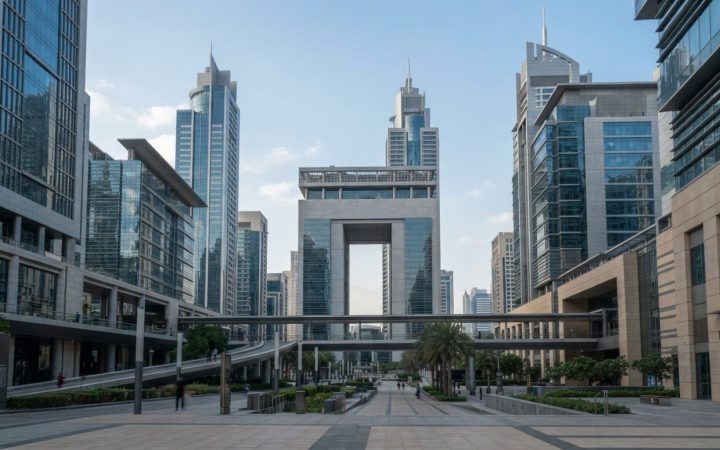

Chinese futures brokerages are expanding their global footprint from Hong Kong to major international financial hubs including Dubai, Singapore, and London, Securities Times reported. Marking 20 years since mainland futures companies first expanded offshore under the CEPA framework in 2006, firms are shifting from channel providers to broader international service networks.
Overseas operations have become a primary earnings driver for industry leaders. In the first half of the year, offshore net profit represented approximately 93% of Nanhua Futures' net profit attributable to shareholders, while overseas financial services contributed over 60% of Yongan Futures' operating profit. In March, Nanhua Futures' subsidiary Heng Hua International received approval to establish subsidiaries in Dubai and Malaysia, following a HK$1.203 billion capital injection that raised its registered capital to HK$2.029 billion.
Expansion has also accelerated across European markets, with Yongan Futures announcing that its wholly owned UK subsidiary obtained investment firm authorization from the UK Financial Conduct Authority. Data from the China Futures Association showed that domestic futures firms had set up 22 first-tier, 39 second-tier, and 6 third-tier overseas subsidiaries across global markets by mid-2025, covering brokerage, securities, forex, and asset management.
Industry executives highlighted that securing offshore licenses represents only an entry point, with firms facing five major hurdles: cross-border capital transfer limits, high overseas margin and financing costs, dual compliance frameworks, cross-time-zone risk controls, and a shortage of hybrid talent. While Chinese firms hold competitive strengths in industrial supply chains and physical delivery, they continue working to build global clearing capabilities and cross-border pricing influence.
Sources
- BigGo Finance · 2026-11-25