
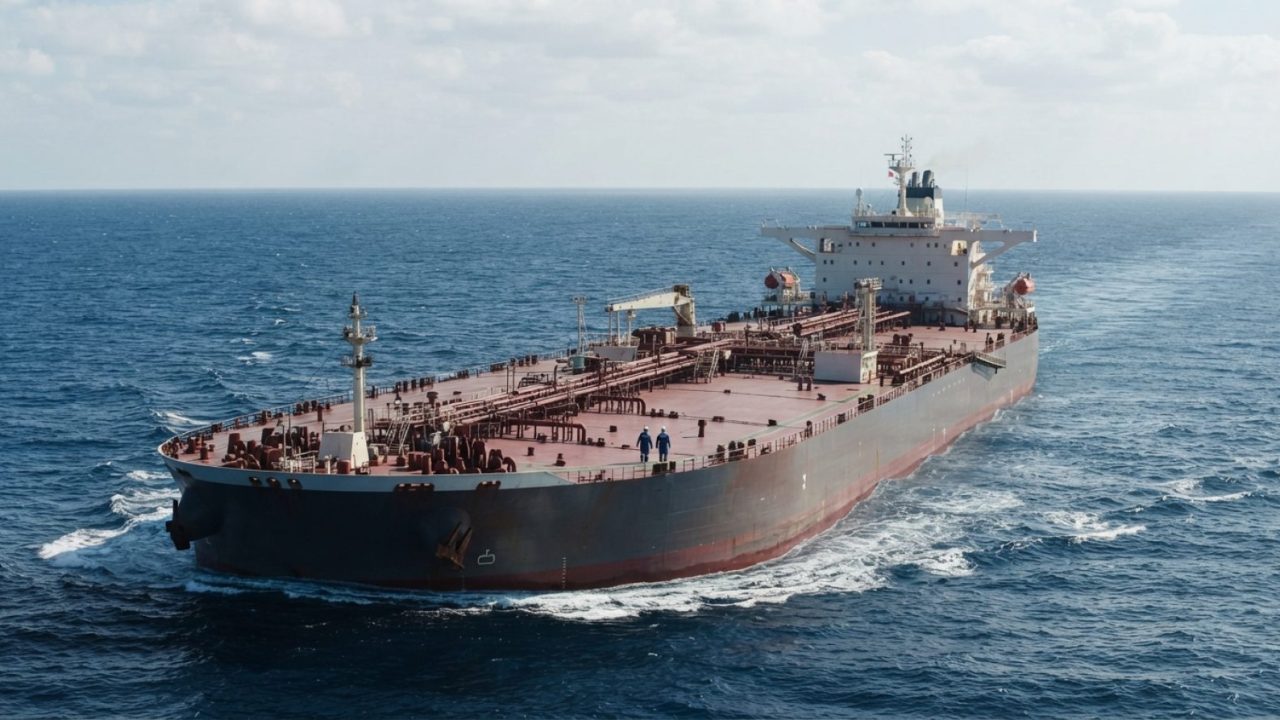
Prices of second-hand crude tankers have risen above the cost of ordering new vessels as disrupted maritime corridors, longer voyages, and elevated freight rates drive demand for immediately available capacity, Logistics Middle East reported. Belgian shipping group CMB.Tech stated that a 15-year-old very large crude carrier (VLCC) now sells for approximately US$165 million, more than three times its 10-year average of US$46 million and higher than the US$132 million benchmark for a newbuild.
The price premium underscores the value placed on tonnage that can enter service immediately, while newly contracted vessels require several years for delivery. CMB.Tech, which operates four VLCCs and 14 Suezmax tankers through its Euronav division, reported a quarterly profit surge following the divestment of two older vessels.
Demand has been influenced by disruption to crude shipments through the Strait of Hormuz following late-February airstrikes on Iran and ensuing regional hostilities. Although maritime flows through the strait have partially recovered, operations continue to face extended routings and altered shipping practices. CMB.Tech noted that 10.9 million barrels per day (bpd) were exported from Saudi Arabia, Iraq, the UAE, Kuwait, and Qatar in October, up from 6.7 million bpd in April.
Logistical inefficiencies such as ship-to-ship transfers and prolonged waiting times at marine terminals have created an exceptional tanker market. CMB.Tech reported that 141 tankers—72% of which were VLCCs—were deployed to shuttle crude and refined products in safer waters within the Gulf of Oman for transfer to other vessels. Average round voyages reached 23 days, more than double the standard nine to 10 days. KBC Securities analyst Kristof Samoy told Reuters that regional oil companies and traders are buying second-hand vessels to secure transport through the strait, making vessel acquisition costs a secondary concern.
Escalating tanker charter rates and transport expenses are also weighing on international oil majors. Shell reported in October that higher tanker lease expenses added US$5.4 billion to its third-quarter costs, while TotalEnergies noted that freight costs near US$25 per barrel were compressing operating margins.
Sources
- Logistics Middle East · 2026-11-25