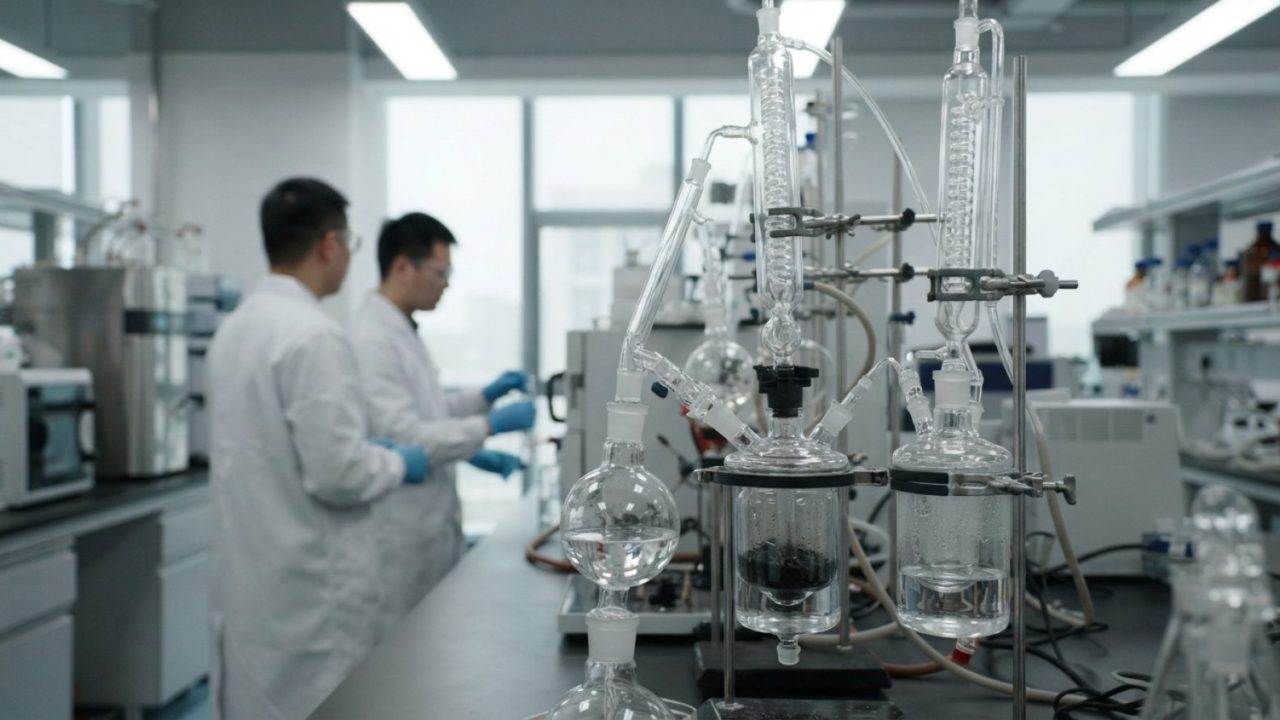
Researchers at United Arab Emirates University (UAEU) have developed a photocatalyst that utilizes light to break down antibiotic residues in water while producing hydrogen fuel, according to TV BRICS citing Emirates News Agency (WAM).
During laboratory trials conducted under visible light from LED lamps, the catalyst degraded more than 98 percent of the antibiotic ciprofloxacin within 90 minutes. The researchers reported that 88 percent of the compound was converted into harmless products.
The process achieved a hydrogen generation rate five times higher than what was reached using either of the catalyst's constituent components on its own.
To manufacture the material, the team combined manganese dioxide and zinc indium sulfide, applying a phosphate treatment to the surface of the manganese dioxide. According to the source, this treatment delayed the recombination of light-generated electrical charges, enabling them to break down pollutants and generate hydrogen more efficiently.
The researchers noted that the findings could support the advancement of systems that utilize sunlight to purify polluted water and produce renewable clean energy.
Sources
- TV BRICS · 2026-10-27