UAE-China Trade Surpasses $100 Billion: What This Milestone Means for Your Business in 2026

Non-oil trade between the UAE and China is set to exceed $100 billion in 2026, up from over $90 billion in 2024. This represents an 800-fold increase since diplomatic relations were established in 1984 and solidifies the UAE’s position as China’s largest trading partner in the Middle East. Understanding the dynamics behind this growth—and how to capitalize on it—is essential for UAE businesses in 2026.
The Numbers Tell an Extraordinary Story
Trade Volume Breakdown
Total Bilateral Trade (2024): $101.8 billion
- Chinese exports to UAE: $65.6 billion
- UAE exports to China: $36.2 billion
First Quarter 2025 Growth:
- Non-oil trade: Up 18% year-on-year
- UAE exports to China: Up 432.5%
- Imports from China: Up 12.7%
The UAE now accounts for nearly 30% of China’s non-oil trade with Arab countries and is China’s second-largest trading partner in West Asia and North Africa.
What’s Being Traded?
China to UAE:
- Machinery and electronics
- Textiles
- Consumer goods
- Electric vehicles
- Telecommunications equipment
- Solar panels and renewable energy equipment
UAE to China:
- Petrochemicals
- Aluminum
- Re-exported goods
- Gold
- Plastics and distillates
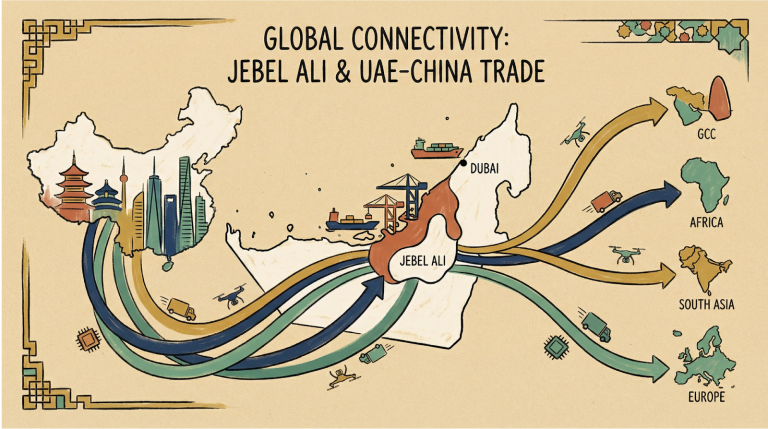
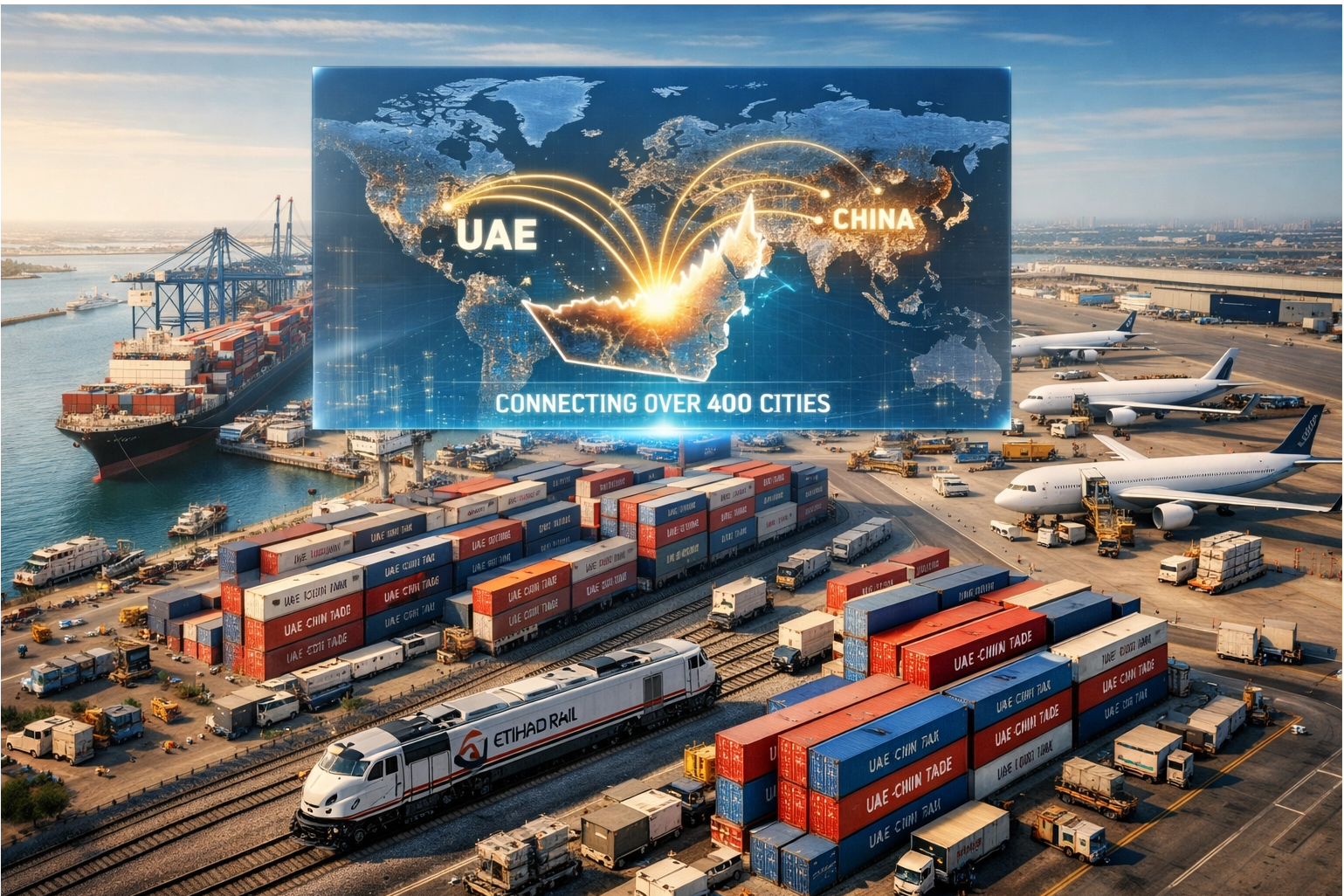
Notably, more than 60% of Chinese exports shipped to the UAE are re-exported to over 400 cities globally, highlighting the UAE’s role as a regional distribution hub.
Five Key Drivers of Growth
1. Strategic Partnership Elevation
The UAE-China Comprehensive Strategic Partnership, established in 2018, has created institutional frameworks for cooperation:
UAE-China Joint Investment and Economic Cooperation Working Group (formed May 2024): Supports bilateral investment collaboration in:
- Digital economy
- Green development
- SME financing
- Innovation and technology
2. Infrastructure Connectivity
Major Belt and Road Initiative projects position the UAE as China’s Gulf gateway:
COSCO’s terminal at Khalifa Port: Handles massive cargo volumes, with trade between Jebel Ali Free Zone (Jafza) and China more than doubling in value and volume since 2020.
Etihad Rail project: Supported by China Railway Construction Corporation Limited (CRCC), connecting industrial zones and ports across the Gulf.
Jafza’s China presence: Hosts more than 450 Chinese companies employing over 1,500 staff, including 11 Fortune 500 firms.
3. Chinese Business Expansion
Over 15,000 Chinese firms now operate in the UAE, according to Ministry of Economy figures. This represents:
- Regional headquarters for Middle East operations
- Manufacturing and assembly facilities
- Trading and distribution centers
- R&D and innovation hubs
4. Financial Integration
Dubai International Financial Centre (DIFC): China International Capital Corporation (CICC) received its DIFC license in 2025, joining other Chinese banks offering:
- Trade finance
- Wealth management
- Cross-border transaction services
Nasdaq Dubai: Chinese issuers have listed more than $22 billion in debt instruments, including green bonds.
Mubadala: Abu Dhabi’s second-largest sovereign wealth fund opened a Beijing office in 2024.
5. E-Commerce and Digital Trade
Chinese e-commerce platforms and digital payment systems are expanding UAE presence:
- Alibaba’s logistics operations
- Cross-border e-commerce facilitation
- Digital payment integration
- Live-streaming commerce pilots
Sectoral Analysis: Where the Opportunities Are
Technology and Telecommunications
China accounted for almost 80% of GCC imports of 5G base stations during key adoption years (2018-2023). UAE companies can:
- Partner with Chinese tech firms on digital infrastructure projects
- Distribute Chinese telecommunications equipment
- Develop joint software solutions
- Integrate AI and cloud services
Automotive and EVs
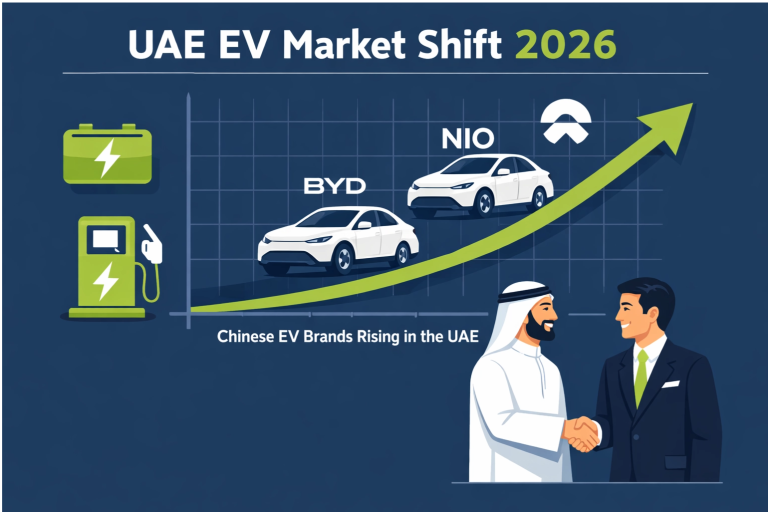
Jebel Ali Port handled over 960,000 vehicles in 2024, with China as the largest automotive trade partner. Multiple Chinese EV brands are launching in the UAE in 2026.
Opportunities:
- Dealership networks
- After-sales service centers
- Parts distribution
- Charging infrastructure
- Fleet management services
Consumer Goods and Retail
Major retailers like Carrefour, Lulu Hypermarket, and Spinneys serve as distribution channels for Chinese brands.
Growth Areas:
- Electronics and appliances
- Fashion and textiles
- Home goods
- Beauty and personal care
- Sports equipment
Logistics and Supply Chain
The UAE’s role as a re-export hub creates opportunities in:
- Warehousing and distribution
- Freight forwarding
- Customs brokerage
- Value-added services (packaging, labeling, quality control)
- Last-mile delivery
Financial Services
With $22 billion in Chinese debt instruments on Nasdaq Dubai and increasing bilateral investment, financial services opportunities include:
- Cross-border payment solutions
- Trade finance
- Project financing
- Wealth management for Chinese nationals
- Insurance products
Construction and Real Estate
Chinese construction firms are active in UAE infrastructure projects. Opportunities exist in:
- Project management
- Materials supply
- Specialized contracting
- Property development joint ventures
Challenges and How to Navigate Them
1. Anti-Dumping Measures
The UAE implemented anti-dumping measures on certain Chinese goods in October 2025 to protect local industries.
Strategy: Focus on products not subject to measures, or add value through customization, service, or quality differentiation.
2. Quality Perceptions
Some Chinese products face quality concerns in certain segments.
Strategy: Partner with reputable Chinese brands, implement quality control processes, and build strong after-sales service networks.
3. Payment and Settlement
Cross-border payment can involve currency conversion costs and delays.
Strategy: Utilize Chinese banks with UAE presence, explore digital yuan pilots for trade settlement, and work with experienced trade finance partners.
4. Cultural and Language Barriers
Business practices and communication styles differ.
Strategy: Hire bilingual staff, invest in cultural training, use professional translators for contracts, and build relationships through in-person meetings.
5. Intellectual Property
IP protection concerns exist when partnering with some Chinese firms.
Strategy: Conduct thorough due diligence, use clear IP clauses in contracts, register trademarks and patents in both jurisdictions, and work with reputable partners.
Practical Steps to Capture Trade Growth
For Importers
1. Identify Reliable Suppliers
- Use platforms like Alibaba.com, Global Sources, Made-in-China.com
- Attend Canton Fair (Guangzhou) and other major trade shows
- Conduct factory visits and audits
- Check business licenses and certifications
2. Negotiate Favorable Terms
- Compare multiple suppliers
- Negotiate payment terms (consider L/C, T/T, or escrow)
- Clarify quality standards and inspection procedures
- Define logistics responsibilities clearly
3. Ensure Compliance
- Verify products meet UAE standards and regulations
- Obtain necessary import licenses
- Work with experienced customs brokers
- Understand anti-dumping duties if applicable
For Exporters
1. Understand Chinese Market Requirements
- Research regulatory requirements for your products
- Obtain necessary certifications (CCC, food safety, etc.)
- Understand import duties and VAT
- Identify target customer segments
2. Find the Right Partners
- Attend UAE-China business matching events
- Work with Chinese trading companies or distributors
- Consider e-commerce platforms (Tmall Global, JD.com)
- Leverage government trade promotion agencies
3. Adapt Your Approach
- Customize products for Chinese preferences if needed
- Develop Chinese-language marketing materials
- Build relationships through multiple interactions
- Be patient—market entry takes time
For Service Providers
1. Position for Chinese Companies
- Offer bilingual services
- Understand Chinese business culture
- Develop China desk capabilities
- Build networks with Chinese business associations
2. Facilitate Trade
- Provide logistics solutions
- Offer trade finance products
- Develop customs expertise
- Create value-added services
The $200 Billion Target: Getting There
Trade projections indicate bilateral commerce could reach $200 billion by 2030. Achieving this requires:
Diversification Beyond Traditional Goods
- Services trade: Tourism, education, healthcare, professional services
- Digital trade: E-commerce, digital content, software services
- Green economy: Renewable energy equipment, sustainability solutions
- High-tech: AI, semiconductors (where permitted), biotechnology
Infrastructure Investment
- Expanding port capacity
- Enhancing air cargo capabilities
- Developing specialized free zones
- Improving digital connectivity
Financial Innovation
- Digital currency pilots for trade settlement
- Blockchain-based trade finance
- Cross-border payment infrastructure
- Risk management products
Policy Coordination
- Streamlined customs procedures
- Mutual recognition of standards
- Investment protection agreements
- Visa facilitation for business travelers
Regional Context: UAE as China’s Gulf Hub
The UAE’s strategic position in China’s Gulf engagement is growing:
Second China-Arab States Summit: Scheduled for 2026 in China, with UAE playing a coordinating role
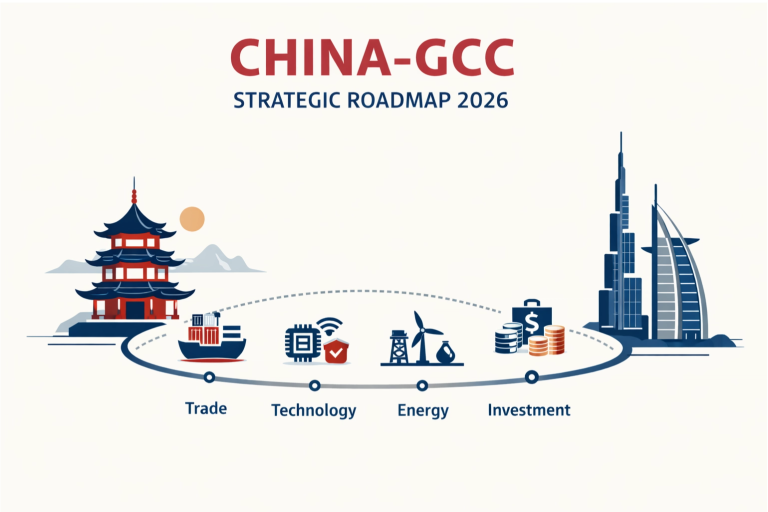
China-GCC Relations: UAE actively supporting FTA negotiations and economic integration
Regional Distribution: UAE serving as the entry point for Chinese goods to:
- GCC countries
- Middle East markets
- African markets
- South Asian markets
This hub role creates multiplier effects for UAE businesses, as growth in UAE-China trade drives growth in UAE’s regional trade.
Looking Ahead: 2026 Priorities
Q1-Q2 2026
- Monitor outcomes of China-Arab States Summit
- Track China-GCC FTA negotiations
- Assess impact of China’s 15th Five-Year Plan
- Evaluate new Chinese company entries to UAE market
Q3-Q4 2026
- Implement partnerships established earlier in the year
- Review performance against trade growth targets
- Plan for 2027 expansion
- Participate in Expo 2025 Osaka (if relevant Chinese partners participating)
Conclusion
The UAE-China trade relationship surpassing $100 billion is more than a milestone—it’s a reflection of deep economic integration between two dynamic economies. For UAE businesses, this growth creates opportunities across virtually every sector.
Success requires understanding that this is not just about importing Chinese goods or exporting to China. It’s about:
- Building strategic partnerships
- Serving as a bridge between markets
- Adding value through services, logistics, and expertise
- Leveraging the UAE’s unique position as a global trade hub
The businesses that will thrive are those that move beyond transactional relationships to create long-term value. Whether you’re an SME exploring your first Chinese partnership or a multinational optimizing supply chains, the $100 billion milestone is an invitation to think bigger about what’s possible.
The UAE-China economic relationship is entering a new phase of maturity and sophistication. Position your business to be part of this next chapter of growth.