
UAE China Economic Horizon 2026 Economic Outlook
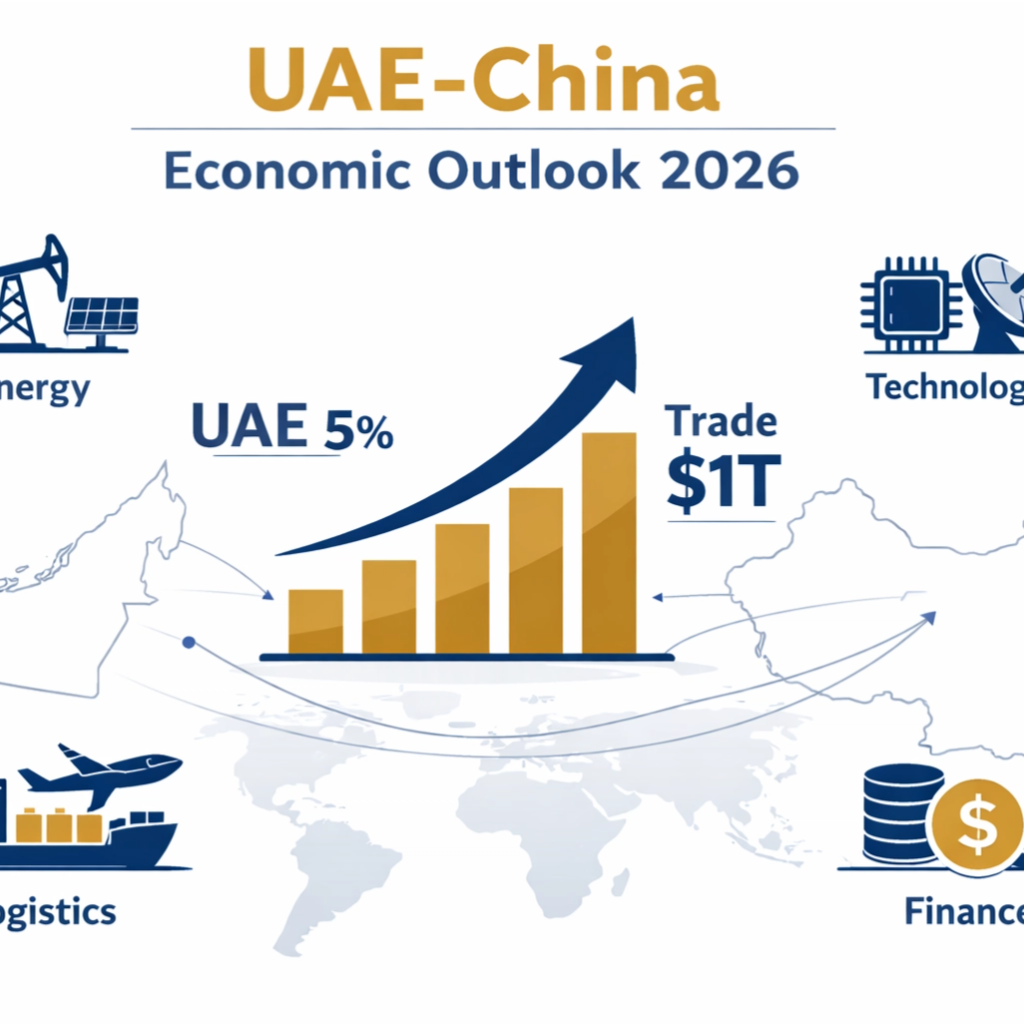
The UAE economy is set to expand by 5% in 2026, with bilateral trade with China approaching the $1 trillion mark. As both economies navigate global uncertainties—from trade tensions to energy transitions—their deepening partnership creates strategic opportunities for businesses and investors. This article analyzes the key growth drivers and investment opportunities shaping UAE-China economic relations in 2026.
UAE Economic Momentum
Strong Growth Projections
Standard Chartered: Upgraded UAE GDP growth forecast to 5.0% in 2026 (from earlier 4.0% projection)
Central Bank of the UAE: Projects real GDP growth of around 5.3% in 2026
IMF: Expects economy to expand by about 5% in 2026
Emirates NBD: Anticipates growth of around 4.5%
ICAEW: Projects growth as high as 5.6%
Consensus: Strong, broad-based growth of 4.5-5.5% in 2026
Nominal GDP
UAE’s nominal GDP is estimated to have reached around $569 billion in 2025, with further growth expected in 2026.
Growth Drivers
Non-Oil Sectors: Expected to grow by about 4.5% in 2026, driven by:
- Tourism and aviation
- Logistics and trade
- Financial services
- Real estate and construction
- Manufacturing and technology
Favorable Demographics: Rising population inflows
Investment: Government-led infrastructure investment crowding in private capital
Trade: Total foreign trade approaching $1 trillion by 2026
China’s Economic Context
Growth and Challenges
Projected Growth: Around 4.6% in 2026 as export diversification offsets trade headwinds
Challenges:
- Weak domestic consumption
- Deflationary risks
- Deepening real estate crisis
- Trade tensions with U.S. and EU
Strengths:
- Clean energy investment ($625 billion in 2024)
- Manufacturing dominance
- Technology advancement
- Belt and Road Initiative expansion
UAE’s Strategic Role in China’s Global Strategy
Why the UAE Matters to China
1. Energy Security
While China diversifies suppliers, the UAE remains a stable, reliable energy partner providing:
- Crude oil
- Refined products
- LNG
- Nuclear energy cooperation
2. Market Access
The UAE serves as gateway to:
- GCC markets (population ~60 million)
- Middle East and North Africa (~500 million)
- Africa (via Jebel Ali Port)
- South Asia
3. Belt and Road Hub
The UAE’s strategic location and infrastructure make it a critical BRI node:
- COSCO Khalifa Port terminal
- Jafza hosting 450+ Chinese companies
- Etihad Rail connecting Gulf markets
4. Financial Center
DIFC and ADGM provide:
- International financial services hub
- RMB internationalization platform
- Investment vehicle structuring
- Wealth management for Chinese nationals
5. Safe Haven
Political stability, rule of law, and business-friendly environment make UAE attractive for Chinese capital seeking:
- Portfolio diversification
- Safe asset storage
- Family office establishment
- Business continuity planning
China’s Importance to UAE
Trade Partnership
Largest Trading Partner: China is UAE’s largest trading partner globally
Non-Oil Trade: Expected to exceed $100 billion in 2026
Trade Volume: UAE-China trade accounts for nearly 30% of China’s non-oil trade with Arab countries
Investment Flows
Over 15,000 Chinese Firms: Operating in UAE across sectors
Major Investments:
- Infrastructure (ports, rail)
- Real estate
- Technology
- Renewable energy
- Manufacturing
Sovereign Wealth Collaboration: UAE funds partnering with Chinese counterparts on regional investments
Technology Transfer
Chinese companies bring:
- Telecommunications infrastructure (5G, data centers)
- Smart city solutions
- Renewable energy technology
- E-commerce platforms
- Fintech innovation
Economic Diversification Partner
China supports UAE’s diversification goals through:
- Manufacturing partnerships
- Technology ventures
- Services sector cooperation
- Innovation ecosystems
Key Investment Themes for 2026
1. Renewable Energy and Clean Tech
Opportunity Size: China’s $625 billion annual clean energy investment creates massive supply chain opportunities
UAE Angles:
- Importing Chinese solar/wind equipment for UAE projects
- Becoming regional distribution hub for Chinese renewable tech
- Joint ventures in third markets (especially Africa)
- Green hydrogen partnerships
Investment Vehicles:
- Direct investment in Chinese renewable companies
- UAE-based distribution companies
- Joint development funds
- Technology licensing agreements
2. Electric Vehicles and Mobility
Opportunity: Chinese EV brands entering UAE and regional markets in 2026
Investment Areas:
- Dealership networks
- Charging infrastructure
- Battery manufacturing/recycling
- Fleet management services
- Insurance and financing
Scale: China’s automotive exports to UAE growing rapidly, with Jebel Ali Port handling 960,000+ vehicles in 2024
3. Digital Infrastructure and Services
Opportunity: 5G, data centers, cloud services, AI expansion
Chinese Strengths: Leading global providers of telecommunications equipment and digital infrastructure
Investment Areas:
- Data center development
- Cloud service partnerships
- AI application development
- E-commerce platforms
- Fintech solutions
4. Logistics and Supply Chain
Opportunity: UAE as distribution hub for Chinese goods to region
Statistics: 60%+ of Chinese goods to UAE are re-exported to 400+ cities
Investment Areas:
- Warehousing facilities
- Last-mile delivery
- Cold chain logistics
- Free zone operations
- Customs brokerage
5. Healthcare and Life Sciences
Opportunity: Growing cooperation in pharmaceuticals, medical devices, and healthcare services
Investment Areas:
- Distribution of Chinese pharmaceuticals
- Medical device imports
- Hospital partnerships
- Telemedicine platforms
- Traditional Chinese Medicine (TCM) centers
6. Real Estate and Construction
Opportunity: Chinese demand for UAE property and construction expertise
Investment Areas:
- Residential property for Chinese investors
- Commercial real estate for Chinese companies
- Construction partnerships on regional projects
- Property management services
7. Financial Services
Opportunity: Growing need for cross-border financial services
Investment Areas:
- Trade finance
- RMB products and services
- Wealth management
- Insurance
- Fintech platforms
8. Food Security and Agriculture
Opportunity: China’s food import needs and UAE’s food security goals
Investment Areas:
- Agricultural product exports to China
- Cold storage and processing
- AgTech partnerships
- Vertical farming
Sector-Specific Analysis
Technology Sector
China’s Edge: Hardware manufacturing, 5G, AI, e-commerce
UAE’s Edge: Regulatory environment, talent, market access
Partnership Model: Chinese technology + UAE market reach
Key Players: Huawei, ZTE, Alibaba, Tencent, ByteDance
Energy Sector
Current State: Traditional oil/gas partnership
Evolution: Shifting toward renewables and clean energy
Investment Focus: Solar, wind, green hydrogen, nuclear, energy storage
Key Players: ADNOC, Masdar, Chinese NOCs, State Grid, renewable companies
Manufacturing Sector
Opportunity: “China+1” sourcing strategies create UAE manufacturing demand
Focus Areas: Electronics assembly, automotive parts, pharmaceutical production
Advantage: UAE free zones offering 0% corporate tax, 100% foreign ownership
Services Sector
Growing Importance: Services trade complementing goods trade
Key Areas: Professional services, tourism, education, healthcare
Partnership Models: Joint ventures, franchising, licensing
Risk Factors to Monitor
1. Geopolitical Tensions
U.S.-China Relations: Trade wars, technology restrictions, investment screening
UAE Strategy: Maintain balanced relations with both powers
Business Impact: Need to navigate dual compliance regimes
2. Economic Slowdown
China’s Property Crisis: Could reduce investment capacity
Global Recession Risks: Would impact trade volumes
Mitigation: Diversify markets and partners
3. Regulatory Changes
China: Increasing compliance requirements (data, cybersecurity, antitrust)
UAE: Evolving regulations (economic substance, beneficial ownership, AML)
Strategy: Invest in compliance capabilities
4. Currency Fluctuations
RMB Volatility: Affects trade settlements and investment returns
Strategy: Use hedging instruments, consider RMB-denominated investments
5. Technological Disruption
Rapid Change: AI, automation, digitalization
Risk: Existing business models becoming obsolete
Strategy: Continuous innovation, technology adoption
Strategic Recommendations
For UAE Businesses
1. Build China Capabilities
- Hire Chinese-speaking staff
- Develop cultural competency
- Establish China offices or representatives
- Join business councils and associations
2. Focus on Value-Addition
- Don’t just import/export—add services, customization, integration
- Become solution providers, not commodity traders
- Invest in technical capabilities
3. Leverage UAE Advantages
- Free zones, tax benefits, strategic location
- Stable regulatory environment
- Access to multiple markets
- World-class infrastructure
4. Partnership Approach
- Seek win-win collaborations
- Focus on complementary strengths
- Build long-term relationships
- Invest in partner success
For Chinese Businesses
1. Use UAE as Regional Hub
- Establish MENA headquarters
- Serve GCC, Middle East, Africa from UAE base
- Leverage UAE’s trade agreements and infrastructure
2. Adapt to Local Market
- Understand cultural differences
- Comply with local regulations
- Hire local talent
- Build local partnerships
3. Focus on Quality and Service
- Overcome quality perception challenges
- Invest in after-sales service
- Build trust through performance
- Pursue premium segments
For Investors
1. Diversified Exposure
Don’t put all eggs in one basket:
- Multiple sectors (tech, energy, logistics, services)
- Multiple investment types (equity, debt, real estate)
- Multiple geographies (UAE, China, third markets)
2. Long-Term Perspective
- UAE-China relationship is strategic and enduring
- Short-term volatility inevitable
- Focus on 5-10 year horizon
3. Professional Management
- Use experienced fund managers
- Conduct thorough due diligence
- Monitor investments actively
- Maintain liquidity for opportunities
Conclusion
The UAE-China economic relationship in 2026 stands at an exciting inflection point. With UAE growth projections of 5%+ and bilateral trade approaching unprecedented levels, the opportunities are vast and varied.
However, success requires strategic thinking:
- Understand macroeconomic drivers
- Identify specific sector opportunities
- Develop appropriate capabilities
- Manage risks intelligently
- Build enduring partnerships
The businesses and investors who approach UAE-China opportunities with sophistication—combining local market knowledge, cultural competency, financial discipline, and strategic patience—will be positioned to capture outsized returns.
As Foreign Minister Wang Yi stated in outlining China’s 2026 foreign policy priorities, the goal is to “accomplish more” in major-country diplomacy. For UAE businesses, this means the opportunities will be there. The question is whether you’re prepared to seize them.