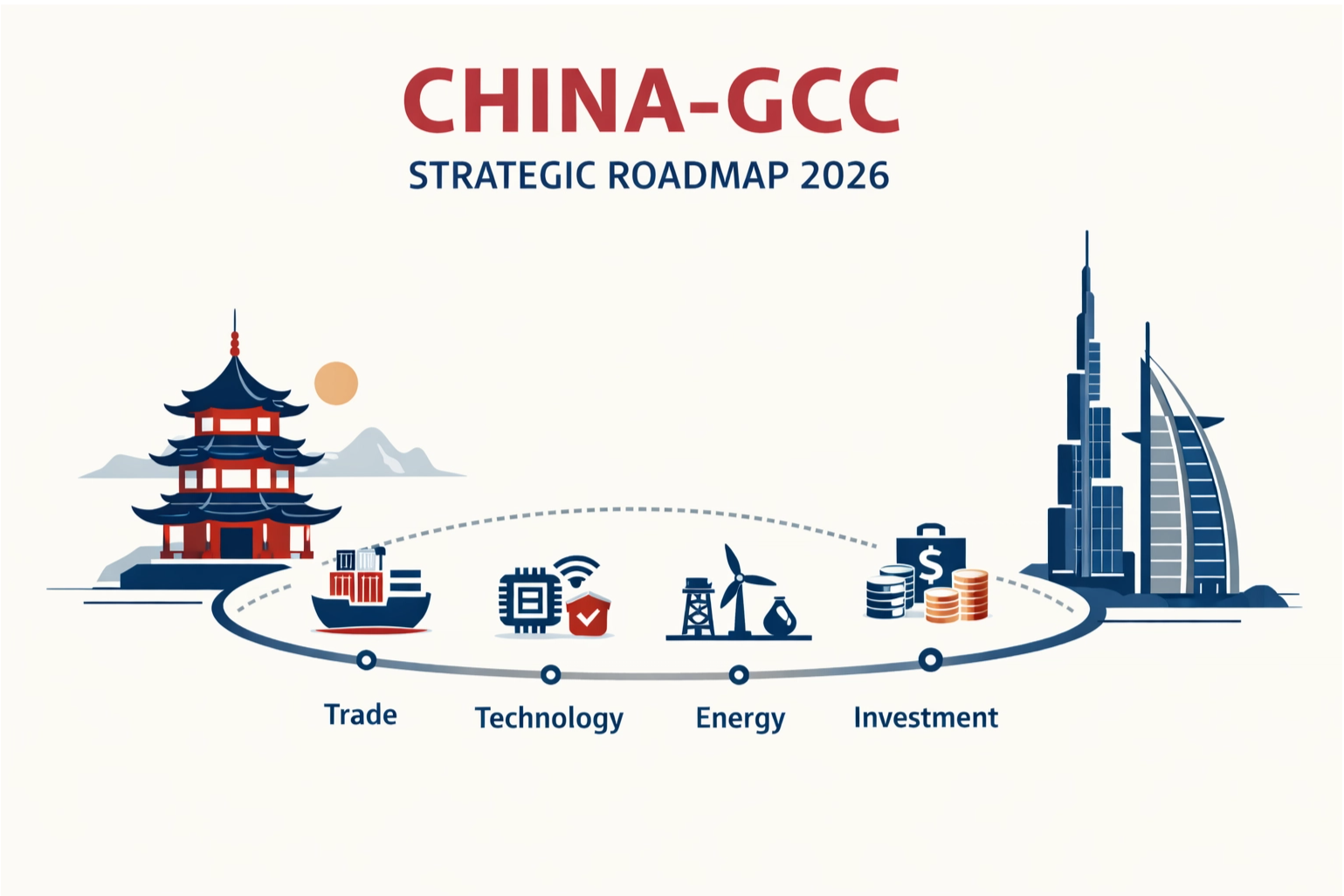
The Second China-Arab States Summit 2026: Strategic Implications for UAE Businesses
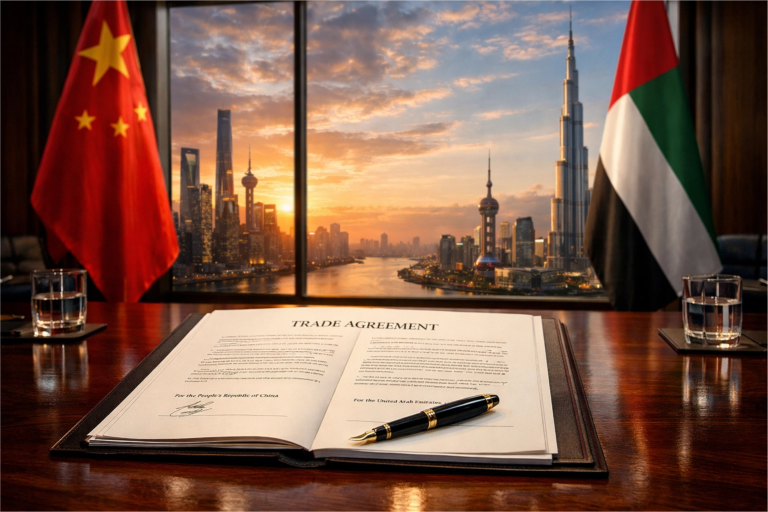
China will host the second China-Arab States Summit in 2026, alongside the second China-GCC Summit. These concurrent summits represent a pivotal moment in China-Arab relations, with potential agreements spanning trade, investment, technology, and energy cooperation. For UAE businesses, understanding the summit’s strategic implications and anticipated outcomes is essential for positioning in the evolving China-Arab economic landscape.
Summit Context: Building on 2022 Success
The first China-Arab States Summit, held in Riyadh in December 2022, established ambitious frameworks for cooperation. Key outcomes included:
- Elevation of China-Arab relations to a comprehensive strategic partnership
- Commitment to expand trade to $430 billion by 2027
- Eight major initiatives covering green development, investment, food security, health, and people-to-people exchanges
- Framework for China-GCC free trade agreement negotiations
The 2026 summit aims to build on these foundations with concrete deliverables.
China’s 2026 Foreign Policy Priorities
During the December 30, 2025 Symposium on International Situation and China’s Foreign Relations, Foreign Minister Wang Yi outlined China’s foreign policy priorities for 2026, providing insight into summit expectations:
Key Commitments
Complete FTA Negotiations: Wang Yi explicitly stated China will work to “complete the negotiations on a China-GCC Free Trade Agreement.”
Elevate Relations: The summit should “yield positive outcomes and elevate China-Arab states relations to a new level.”
Build Community: Move forward toward building a “China-Arab community with a shared future.”
High-Level Attendance: As a major diplomatic event in China’s 15th Five-Year Plan period, expect significant leader participation from both China and Arab states.
Expected Summit Outcomes
Based on official statements and bilateral engagement patterns, the 2026 summit is likely to produce:
1. Trade and Investment Agreements
China-GCC FTA Progress: While full conclusion remains uncertain, expect announcements on:
- Agreement on additional negotiating chapters
- Timeline commitments for remaining issues
- Sectoral frameworks for sensitive industries
- Implementation roadmap if concluded
Bilateral Investment Treaties: Updated or new BITs between China and individual Arab states.
Industrial Cooperation: Agreements in manufacturing, technology, and infrastructure.
2. Energy and Green Development
Given China’s $625 billion clean energy investment in 2024 and the UAE’s renewable energy leadership:
Renewable Energy Partnerships: Joint projects in solar, wind, and green hydrogen across Arab states.
Oil and Gas Stability: Long-term supply agreements and strategic reserves cooperation.
Carbon Markets: Potential framework for carbon trading and offset mechanisms.
Nuclear Cooperation: Civil nuclear energy development agreements (particularly UAE-China).
3. Technology and Digital Economy
5G and Telecommunications: Expanded deployment of Chinese telecommunications infrastructure.
Artificial Intelligence: Cooperation frameworks in AI development and deployment.
E-Commerce: Cross-border digital trade facilitation agreements.
Smart Cities: Joint projects in urban digitalization and management.
Fintech: Digital currency pilots and cross-border payment systems.
4. Belt and Road Initiative 2.0
Upgraded BRI Projects: Next-generation infrastructure investments focusing on:
- High-speed rail connections
- Port and logistics upgrades
- Industrial parks and special economic zones
- Digital silk road infrastructure
Green BRI: Increased focus on sustainable and climate-friendly projects.
5. Financial Integration
Currency Cooperation: Expanded use of RMB in bilateral trade, possible digital yuan pilots.
Development Financing: Increased lending from Chinese development banks.
Sovereign Wealth Fund Collaboration: UAE funds (ADIA, Mubadala) partnering with Chinese counterparts on regional investments.
6. People-to-People Exchanges
Education: Student exchange programs, Chinese language education in Arab schools, joint universities.
Tourism: Visa facilitation, direct flight expansion, tourism promotion agreements.
Cultural Centers: Establishment of cultural centers and Confucius Institutes.
7. Food and Health Security
Agricultural Trade: Increased food exports from Arab states to China.
Agricultural Technology: Joint R&D in desert agriculture and water conservation.
Pharmaceutical Cooperation: Joint vaccine development, medicine trade, healthcare partnerships.
Strategic Implications for UAE Businesses
Immediate Opportunities (Post-Summit)
1. FTA Preparation
Even if the China-GCC FTA isn’t fully concluded, sectoral agreements or framework understandings create opportunities:
- Companies should identify which sectors get early liberalization
- Prepare for increased competition in opened sectors
- Position for new market access opportunities
2. Belt and Road Projects
New BRI announcements create opportunities for:
- UAE contractors as regional partners on China-funded projects
- Professional services (legal, accounting, consulting) for BRI initiatives
- Logistics and supply chain services
- Equipment and materials supply
3. Technology Partnerships
Digital economy agreements open doors for:
- Joint ventures in e-commerce platforms
- Smart city project participation
- Fintech collaborations
- AI application development
4. Green Energy Projects
Renewable energy agreements create demand for:
- Solar and wind equipment distribution
- Project development services
- O&M services for renewable facilities
- Energy storage solutions
Medium-Term Strategic Positioning
1. Regional Hub Strategy
UAE companies should position as:
- Regional headquarters for Chinese companies serving Arab markets
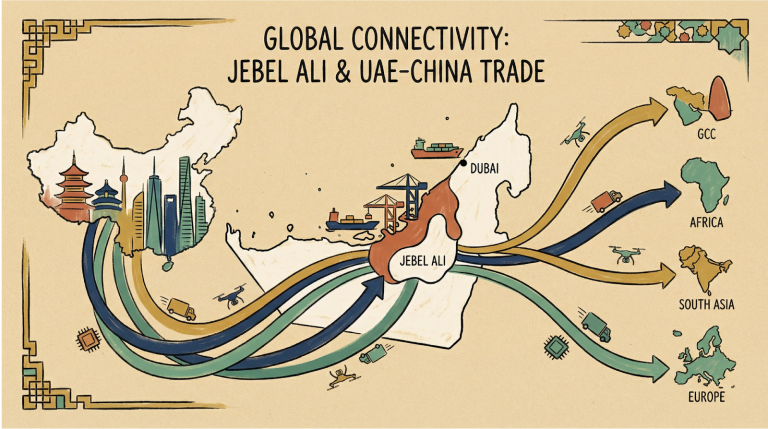
- Distribution centers for Chinese goods to Arab states
- Service hubs for China-Arab trade (finance, legal, logistics)
2. Co-Investment Platforms
Create vehicles for:
- UAE-China joint investments in third Arab markets
- Sovereign wealth fund collaborations
- Private equity funds targeting China-Arab opportunities
3. Technology Transfer
Establish programs for:
- Bringing Chinese technology to Arab markets
- Adapting Chinese solutions for Arabic-speaking markets
- Training and capacity building
4. Supply Chain Integration
Position in value chains connecting:
- Chinese manufacturing with Arab consumption
- Arab natural resources with Chinese processing
- Re-export opportunities leveraging UAE’s trade infrastructure
Sector-Specific Opportunities
Construction and Infrastructure
Opportunities:
- Partnering with Chinese contractors on Arab infrastructure projects
- Supplying materials and equipment
- Providing project management and consulting
- Operating and maintaining completed projects
Action: Identify key BRI projects announced at summit and develop partnership proposals.
Financial Services
Opportunities:
- Trade finance for China-Arab commerce
- Investment banking for deal structuring
- Wealth management for Chinese nationals in Arab states
- Insurance products for cross-border investments
Action: Develop China desk capabilities and Arabic-speaking Chinese-fluent staff.
Technology and Telecommunications
Opportunities:
- Distributing Chinese telecommunications equipment
- Integrating Chinese smart city solutions
- Developing Arabic-language apps and platforms
- Providing cybersecurity services
Action: Establish partnerships with major Chinese tech companies before they enter Arab markets independently.
Renewable Energy
Opportunities:
- Developing solar and wind projects with Chinese financing
- Distributing Chinese renewable equipment
- Providing engineering and construction services
- Operating renewable energy facilities
Action: Identify Arab states receiving Chinese renewable energy investments and position as local partners.
Healthcare and Pharmaceuticals
Opportunities:
- Distributing Chinese pharmaceuticals in Arab markets
- Joint ventures in manufacturing
- Medical device trade
- Telemedicine platforms
Action: Obtain distribution agreements and navigate regulatory approvals in advance.
Food and Agriculture
Opportunities:
- Exporting Arab agricultural products to China
- Importing Chinese agricultural equipment and inputs
- Joint ventures in desert agriculture
- Food processing and value-addition
Action: Conduct market research on Chinese food import requirements and position products accordingly.
Pre-Summit Preparation Checklist
For All Businesses
- [ ] Monitor official summit announcements and leaked agendas
- [ ] Identify sectors most likely to see agreements
- [ ] Assess your positioning in these sectors
- [ ] Develop preliminary partnership proposals
- [ ] Engage with Chinese partners or potential partners
For UAE Government-Related Entities
- [ ] Coordinate with UAE Ministry of Economy and Foreign Affairs
- [ ] Identify strategic sectors for UAE national interest
- [ ] Prepare investment proposals aligned with anticipated agreements
- [ ] Develop UAE pavilion or presence at any business forums alongside summit
For Financial Institutions
- [ ] Prepare trade finance products for expanded China-Arab commerce
- [ ] Develop RMB products and services
- [ ] Create investment vehicles for announced opportunities
- [ ] Train staff on anticipated new frameworks
For Service Providers (Legal, Consulting, Accounting)
- [ ] Develop expertise in likely agreement frameworks
- [ ] Build capabilities in relevant sectors (energy, tech, infrastructure)
- [ ] Strengthen Chinese-Arabic language capabilities
- [ ] Create thought leadership content positioning your expertise
Post-Summit Action Plan
Week 1-2 After Summit
- Analyze Outcomes: Review all agreements and statements
- Impact Assessment: Evaluate specific impacts on your business
- Opportunity Identification: List concrete opportunities from agreements
- Competitive Analysis: Assess how competitors might respond
Month 1-3 After Summit
- Partnership Development: Approach potential Chinese or Arab partners
- Proposal Creation: Develop detailed business proposals
- Regulatory Navigation: Understand new frameworks and requirements
- Team Building: Hire or train staff with needed capabilities
Month 4-12 After Summit
- Deal Execution: Sign agreements and launch ventures
- Market Entry: Begin operations in new markets or sectors
- Relationship Building: Deepen partnerships and expand networks
- Performance Monitoring: Track progress against objectives
Risk Considerations
Implementation Gap
Summits produce aspirational goals. Actual implementation often lags due to:
- Bureaucratic delays
- Funding challenges
- Political changes
- Technical obstacles
Mitigation: Focus on agreements with detailed implementation mechanisms and committed funding.
Geopolitical Tensions
U.S.-China relations and Middle East geopolitics could affect implementation.
Mitigation: Diversify partnerships and markets. Don’t bet everything on China-Arab cooperation.
Sectoral Overcrowding
Popular sectors see many entrants, reducing margins.
Mitigation: Seek niche opportunities or underserved markets within broader frameworks.
Regulatory Changes
New agreements require regulatory updates that may be slow or uncertain.
Mitigation: Engage early with regulators, participate in consultations, build compliance capabilities.
Conclusion
The second China-Arab States Summit in 2026 represents more than a diplomatic gathering—it’s a strategic inflection point in global economic relations. For UAE businesses, the summit offers a window into the future of China-Arab economic integration.
The key to success lies in preparation:
- Understand likely outcomes before they’re announced
- Position your business to capture resulting opportunities
- Move quickly after the summit to beat competitors
- Build long-term capabilities, not just transactional relationships
The UAE’s strategic position—as both a leading Arab economy and China’s largest trading partner in the Middle East—creates unique advantages for UAE businesses to act as bridges, facilitators, and co-investors in the expanding China-Arab economic space.
Those who prepare now will be ready to capitalize when summit agreements create concrete opportunities. Those who wait will find the best opportunities already claimed.