China’s $625 Billion Clean Energy Revolution: Strategic Opportunities for UAE Businesses in 2026
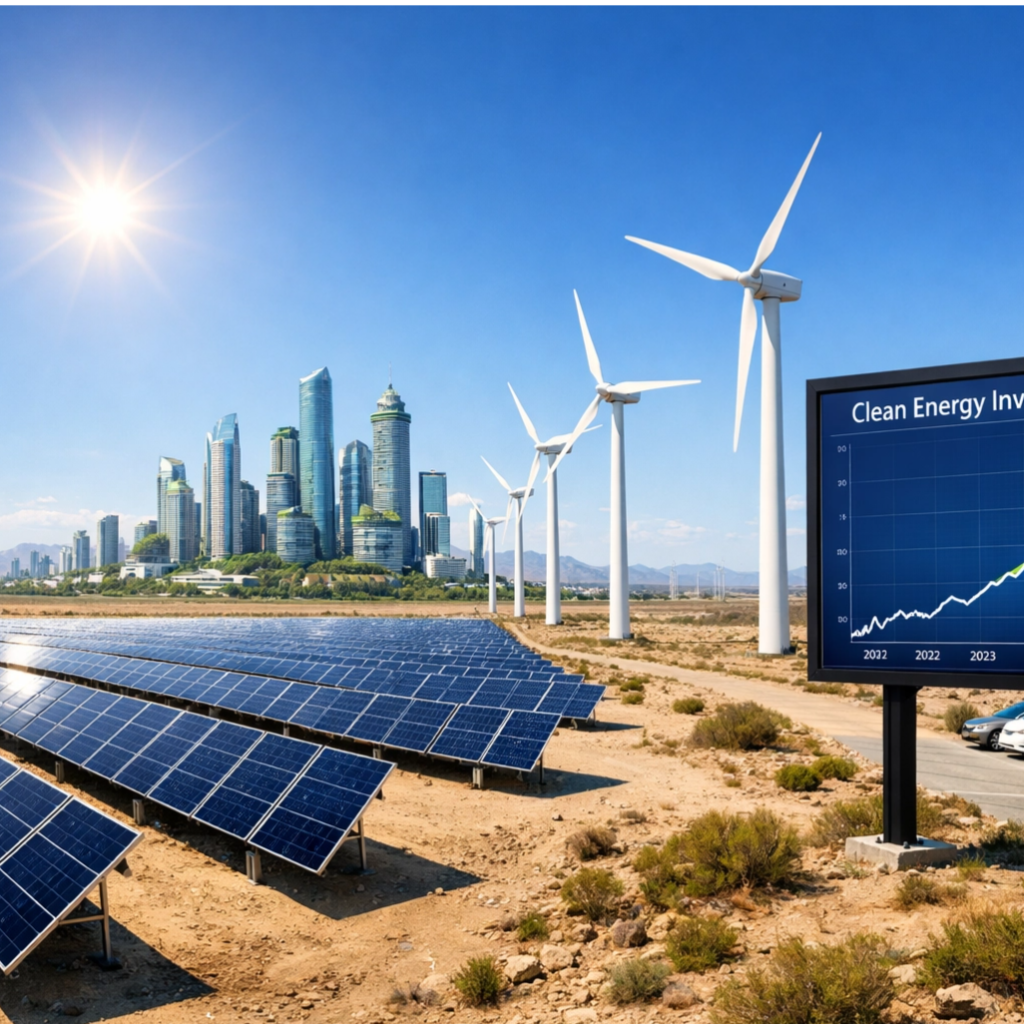
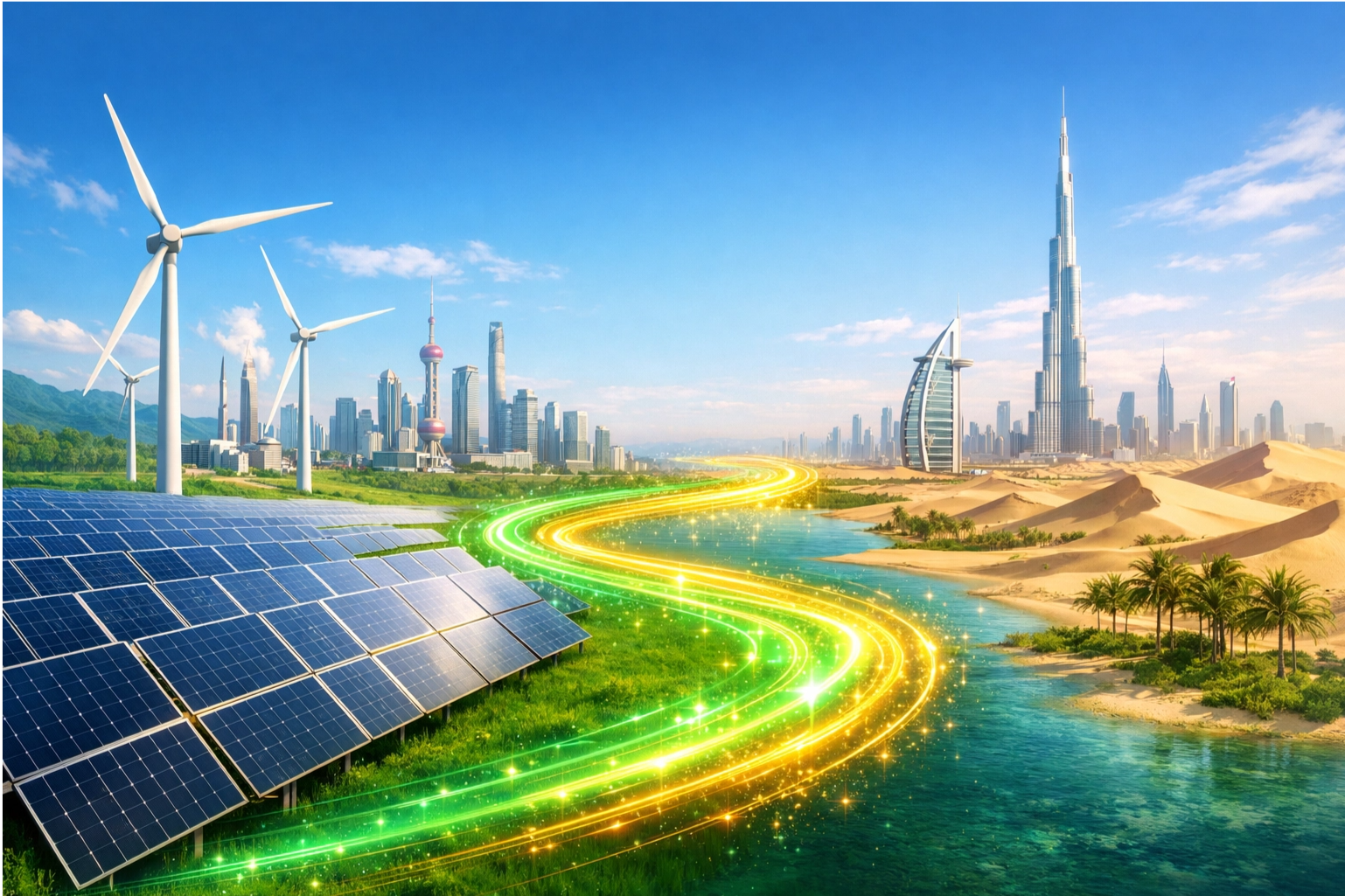
China invested a record $625 billion in clean energy in 2024, more than the United States, European Union, and United Kingdom combined. By early 2026, wind and solar capacity has outranked coal capacity in China’s power mix for the first time in history. This unprecedented transformation creates significant opportunities for UAE businesses across the energy value chain—from renewable technology partnerships to supply chain integration and knowledge transfer.
The Scale of China’s Clean Energy Transformation
The numbers are staggering and reshape global energy dynamics:
Record-Breaking Capacity Additions
Total Power Capacity (2025): 3,890 gigawatts (GW)
- Solar capacity: 1,200 GW (up 35% from 2024)
- Wind capacity: 640 GW (up 23% from 2024)
- Thermal (mostly coal) capacity: Just over 1,500 GW (up 6%)
For the first time, combined wind and solar capacity (1,840 GW) exceeds coal capacity in China’s power mix. Projections suggest that by mid-2026, solar capacity alone could surpass coal as China’s primary energy source, reaching an estimated 1.38 terawatts.
Investment Momentum
In 2024, China accounted for two-thirds of the $2.1 trillion spent globally on energy transition investments. Clean energy sectors contributed a record $2.1 trillion (15.4 trillion yuan) to China’s economy in 2025, representing 11.4% of GDP—comparable to the economies of Brazil or Canada.
Clean energy drove more than one-third of China’s economic growth in 2025 and more than 90% of the rise in investment. The “new three” industries—electric vehicles, lithium batteries, and solar power—are now significant GDP contributors.
Manufacturing Dominance
China produces:
- 63% of the world’s solar photovoltaics
- 60% of global EV battery market share (2023)
- More wind turbines and solar panels installed in 2024 than the rest of the world combined
By August 2025, total installed renewable capacity in China exceeded 1,600 GW, surpassing fossil fuel capacity for the first time.
What’s Driving This Revolution?
Strategic Policy Framework
China’s transformation is driven by coordinated policy initiatives:
14th Five-Year Plan (2021-2025): Prioritizes “clean, low-carbon, safe, and efficient” energy systems
Dual Carbon Goals:
- Peak emissions by 2030 (likely to be achieved early)
- Carbon neutrality by 2060
Guiding Opinions on Renewable Energy Substitution (October 2024): Aims to significantly increase renewable energy consumption by 2025 and 2030
These policies create an environment conducive to rapid infrastructure development and technological advancement.
Economic Imperative
Clean energy investment is not just environmental policy—it’s economic strategy. After slowing GDP growth, weak domestic consumption, and a deepening real estate crisis, clean energy has become a key economic driver.
Without clean energy sectors, China would have missed its GDP growth target of “around 5%” in 2025, expanding by only 3.5% instead of the reported 5.0%. This creates strong government motivation to keep the clean energy boom going.
Technological Innovation
China’s strategic investments cover every aspect of renewable technologies:
- Solar and wind capacity
- Green hydrogen
- Geothermal projects
- Battery storage and supply chains
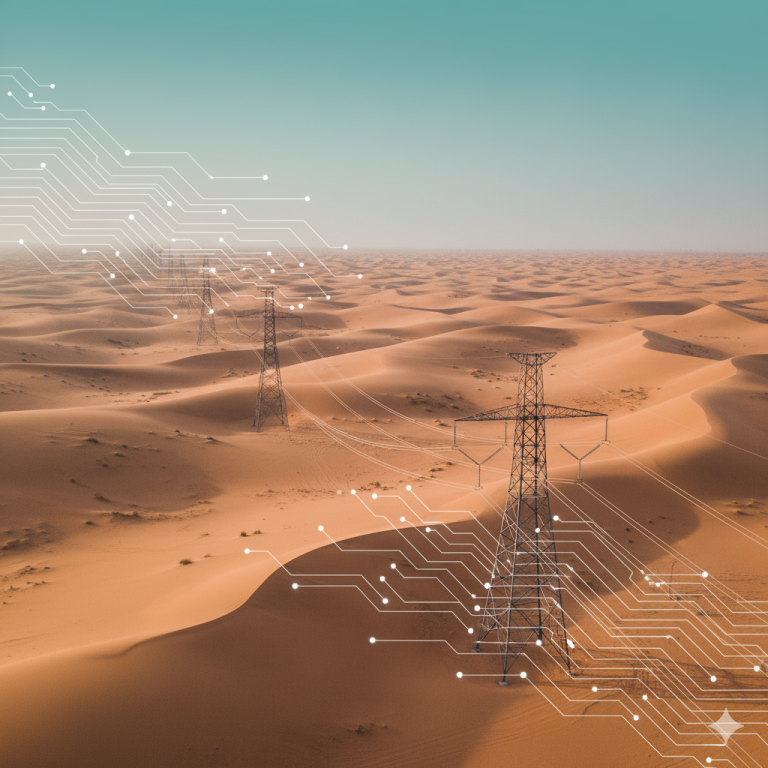
- Ultra-high-voltage (UHV) transmission lines
- Smart grid systems
UAE-China Clean Energy Partnerships: Current State
The UAE and China are already deepening cooperation in renewable energy and green technology:
Recent High-Level Engagement
In June 2025, Dr. Sultan Ahmed Al Jaber, UAE Minister of Industry and Advanced Technology and Chairman of Masdar, led a delegation to China to strengthen bilateral cooperation in:
- Energy and renewable energy
- Industrial development
- Infrastructure
- Strategic investments
Strategic Alignment
Both nations are aligning their clean energy strategies:
- UAE: Targeting net-zero by 2050, massive solar investments, nuclear energy expansion, green hydrogen leadership
- China: Dual carbon goals, renewable capacity expansion, clean energy technology exports
Existing Collaborations
COSCO’s terminal at Khalifa Port: Part of China’s Belt and Road Initiative, facilitating logistics for green energy equipment
China-UAE Industrial Capacity Zone: Positioning the UAE as China’s Gulf gateway for renewable technology distribution
Masdar partnerships: Joint renewable energy projects in third markets
Strategic Opportunities for UAE Businesses in 2026
1. Renewable Technology Imports and Distribution
Opportunity: China’s solar panels, wind turbines, and battery storage systems are cost-competitive and technologically advanced. UAE companies can:
- Become authorized distributors for Chinese renewable equipment brands
- Import solar panels for UAE’s expanding solar capacity
- Source battery storage systems for grid integration projects
- Distribute Chinese renewable technology across GCC and African markets
Market Size: With UAE total foreign trade approaching the $1 trillion mark by 2026, and the Asia corridor accounting for roughly one-third, renewable technology represents a significant opportunity.
2. Green Hydrogen Partnerships
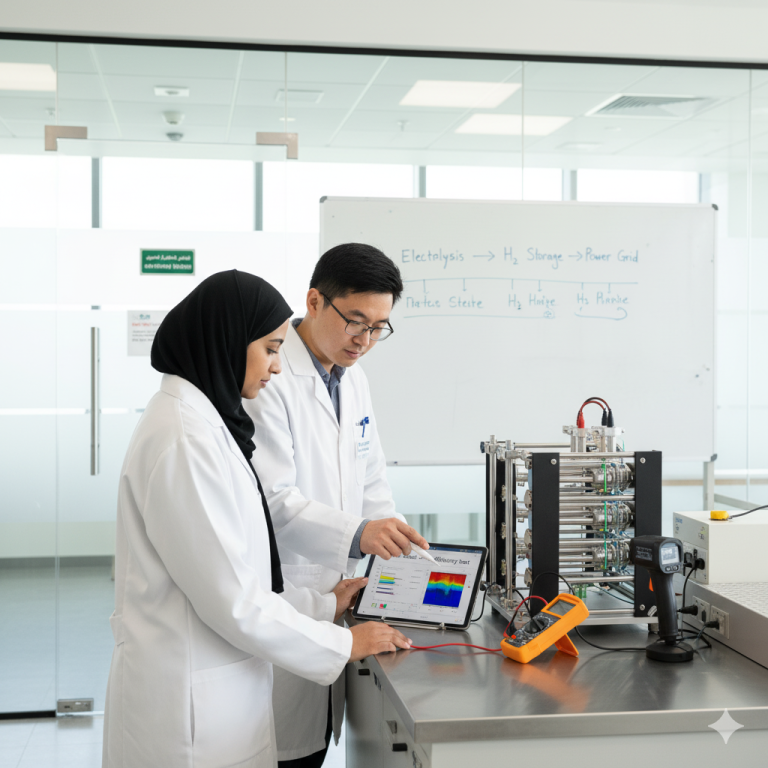
China launched its first regional hydrogen corridor connecting Inner Mongolia and Hebei in 2024, integrating hydrogen production with wind and solar generation. The UAE is also emerging as a green hydrogen leader.
Partnership Opportunities:
- Joint ventures in electrolyzer technology
- Hydrogen production facility development
- Supply chain integration for hydrogen transport
- Technology transfer agreements
Why It Matters: Both nations are positioning themselves as global green hydrogen exporters. Collaboration could enhance competitiveness and market access.
3. EV and Battery Supply Chain Integration
China’s EV and battery industries contributed approximately 39% of clean energy investment in 2024. Multiple Chinese automotive brands are launching in the UAE in 2026, including BYD, Zeekr, NIO, Denza, and Omoda.
Opportunities for UAE Businesses:
- Dealership networks: Authorized sales and service centers
- Charging infrastructure: EV charging station installation and operation
- Battery recycling: Establishing collection and recycling facilities
- Parts supply: Becoming regional parts distributors
- Fleet services: Managing EV fleets for government and corporate clients
Market Context: BYD overtook Tesla as the world’s largest seller of electric vehicles in early 2026, signaling Chinese EV dominance.
4. Grid Infrastructure and Energy Storage
China invested more than $80 billion in power grid infrastructure in 2024, including ultra-high-voltage transmission lines. With 66 GW of battery storage capacity added in 2025 (up 52% year-on-year), China is also the global leader in energy storage.
UAE Opportunities:
- Import Chinese energy storage systems for utility-scale projects
- Partner with Chinese firms on smart grid technologies
- Joint ventures in grid modernization projects across Middle East and Africa
- Technology licensing for battery storage manufacturing
5. Belt and Road Energy Projects
China invested USD 11.8 billion in green energy projects through the Belt and Road Initiative in 2024, marking a 60% increase from 2023. This includes solar, wind, and waste-to-energy initiatives.
Strategic Role for UAE:
- Co-financing BRI green energy projects in third markets
- Joint development of renewable projects in Africa and South Asia
- UAE as regional headquarters for Chinese renewable companies targeting BRI countries
- Knowledge transfer and capacity building partnerships
6. Research and Development Collaboration
China leads globally in renewable energy patent filings and research publications. UAE entities can:
Partnership Models:
- Joint research centers in solar technology optimization for desert climates
- Collaborative PhD programs in renewable energy
- Technology commercialization agreements
- Pilot projects testing Chinese innovations in UAE conditions
Focus Areas:
- Solar panel efficiency in extreme heat
- Dust mitigation technologies
- Water desalination using renewable energy
- Grid stability with high renewable penetration
7. Manufacturing and Localization
With China dominating renewable supply chains but facing increasing trade tensions, there’s opportunity for:
Manufacturing Partnerships:
- Solar panel assembly facilities in UAE free zones for regional distribution
- Battery pack assembly for electric vehicles
- Wind turbine component manufacturing
- Inverter and power electronics production
Benefits:
- Avoid tariffs and trade restrictions
- “Made in UAE” branding for regional markets
- Job creation and technology transfer
- Proximity to key markets in GCC, Africa, and South Asia
Navigating the Challenges
Overcapacity Concerns
China’s clean energy investment growth slowed to 7% in 2025 from 40% in 2023 due to overcapacity concerns. Solar manufacturing investment declined in the second half of 2025.
UAE Strategy: Focus on quality, after-sales service, and specialized applications where Chinese overcapacity creates opportunity for competitive pricing.
Trade Tensions
Chinese clean energy exports face increasing tariffs in Western markets. The UAE has also implemented anti-dumping measures on some Chinese goods.
UAE Strategy: Position the UAE as a neutral processing and distribution hub, adding value through assembly, customization, or integration services.
Technology Transfer Concerns
Some Chinese companies are protective of core technologies.
UAE Strategy: Focus on partnerships where both sides bring complementary strengths—Chinese technology plus UAE market access, financing, and regional expertise.
Financing Considerations
Massive Chinese clean energy projects often involve Chinese development banks.
UAE Strategy: Leverage UAE sovereign wealth funds and development finance institutions to structure win-win financing arrangements.
Practical Next Steps for UAE Businesses
1. Sector-Specific Analysis
Identify which clean energy subsectors align with your business capabilities and market position. Conduct detailed feasibility studies.
2. Establish Chinese Partnerships
Connect with Chinese renewable companies through:
- UAE-China Business Council
- Direct missions to major Chinese clean energy hubs (Beijing, Shanghai, Shenzhen)
- Trade shows like the China International Import Expo (CIIE)
- Online platforms like Alibaba.com for supplier discovery
3. Leverage Free Zone Advantages
Utilize UAE free zones offering:
- 100% foreign ownership
- Tax benefits
- Streamlined business setup
- Proximity to Jebel Ali Port (which handled over 960,000 vehicles in 2024, with China as the largest automotive trade partner)
4. Access Financing
Explore funding through:
- UAE banks with China desks
- China Development Bank
- Asian Infrastructure Investment Bank (AIIB)
- Joint venture equity structures
5. Build Technical Capacity
Invest in training programs to develop local expertise in:
- Solar panel installation and maintenance
- EV charging infrastructure
- Battery storage systems operation
- Smart grid technologies
6. Engage Policy Makers
Work with UECN and government entities to:
- Shape favorable regulatory frameworks
- Advocate for renewable energy incentives
- Facilitate Chinese company entry to UAE market
- Develop standards and certifications
The 15th Five-Year Plan: What to Watch
China’s 15th Five-Year Plan (2026-2030) is being finalized in early 2026. Key items to monitor:
- Renewable capacity targets: Central government targets have been set far below current rates of additions. Provincial plans may be more ambitious.
- Grid investment priorities: Transmission infrastructure connecting western generation to eastern demand centers
- Energy storage mandates: Requirements for renewable projects to include storage
- Green hydrogen targets: Production capacity and application requirements
- International cooperation frameworks: BRI clean energy focus and partnership mechanisms
Provincial governments have leeway in implementing electricity markets and renewable power contracting. Their five-year plans will significantly influence opportunities.
Conclusion
China’s $625 billion clean energy investment in 2024 is not just reshaping China’s energy system—it’s transforming global renewable energy markets. For UAE businesses, this creates unprecedented opportunities across the entire clean energy value chain.
The UAE and China are natural partners in this transition. The UAE’s strategic location, advanced infrastructure, business-friendly environment, and clean energy ambitions complement China’s manufacturing prowess, technological innovation, and financing capabilities.
Success requires moving beyond transactional relationships to strategic partnerships. UAE businesses that position themselves as bridges between Chinese clean energy capabilities and regional markets will be best positioned for long-term growth.
The clean energy revolution is here. It’s being led by China. And UAE businesses have a strategic window in 2026 to secure their role in this transformation.